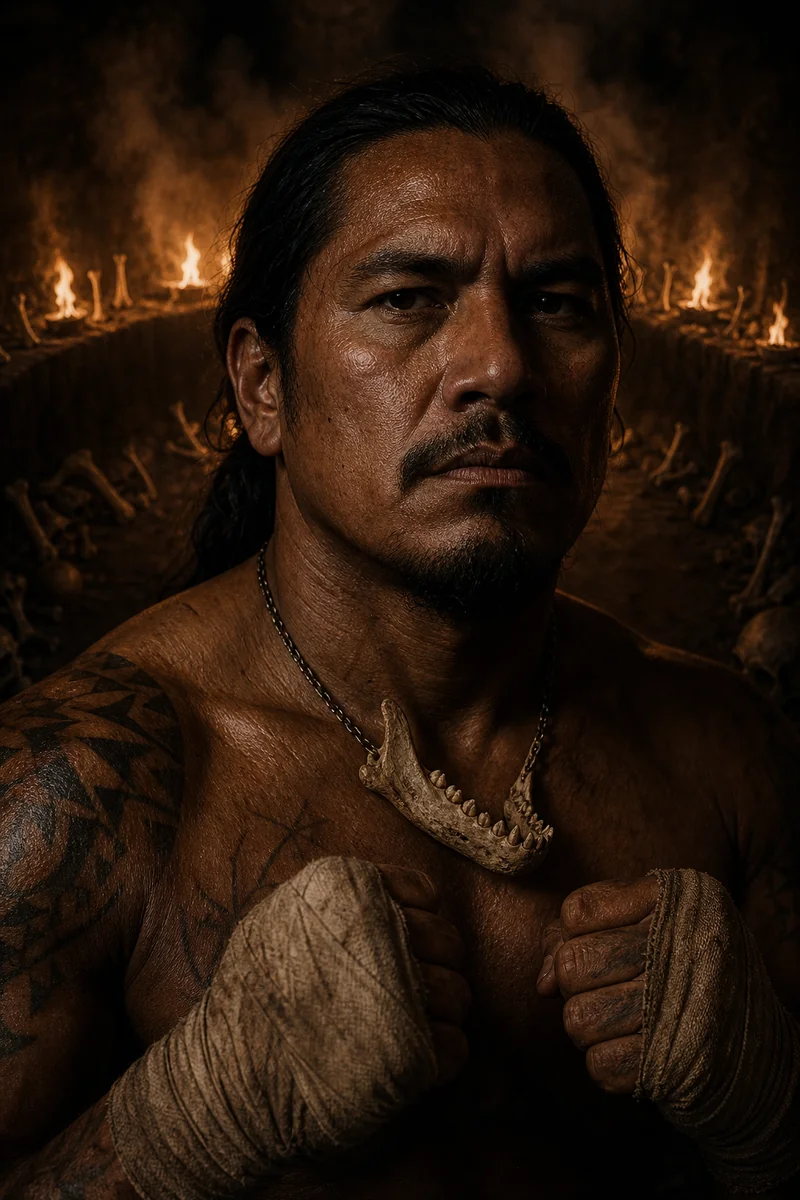
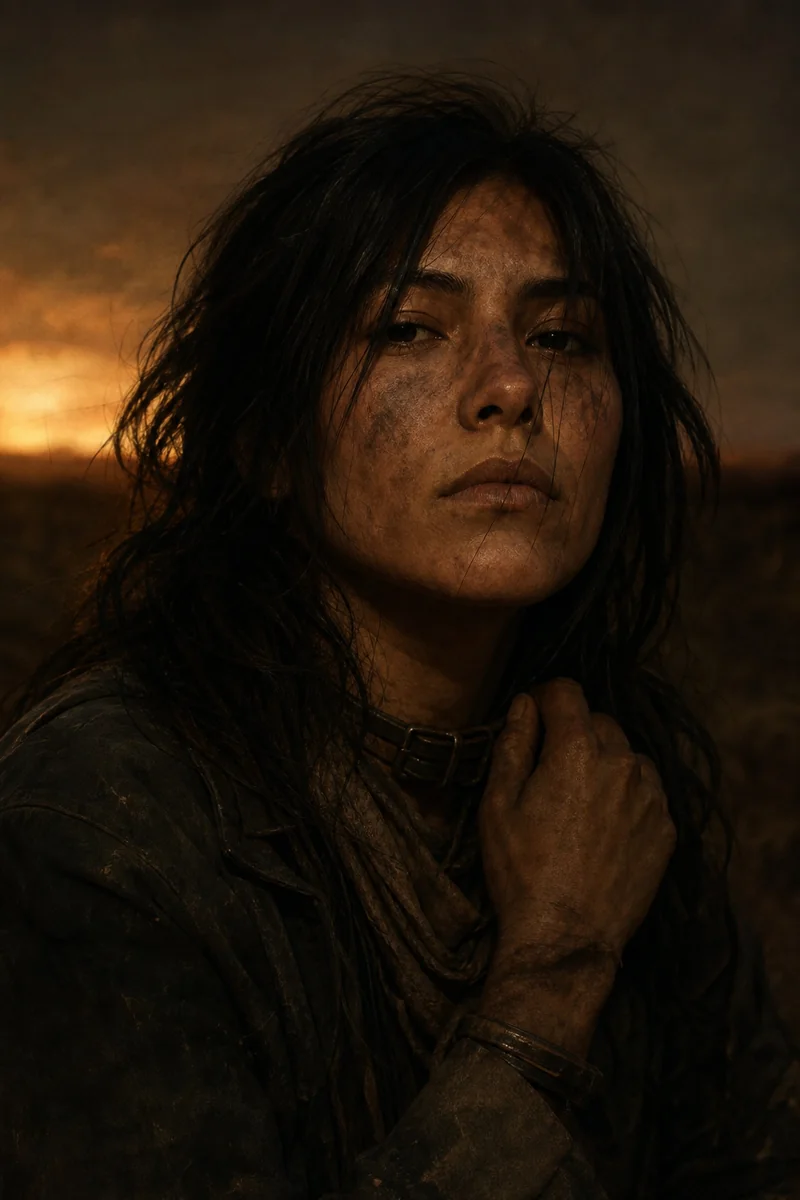
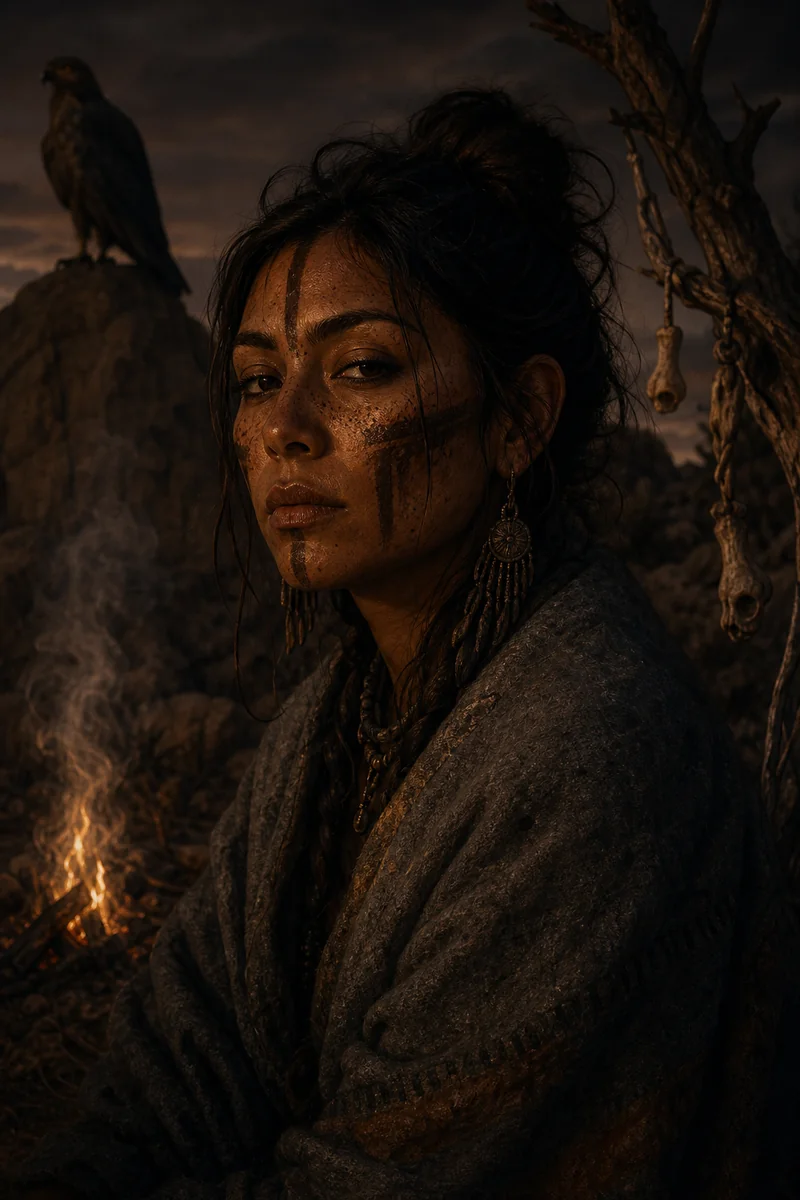
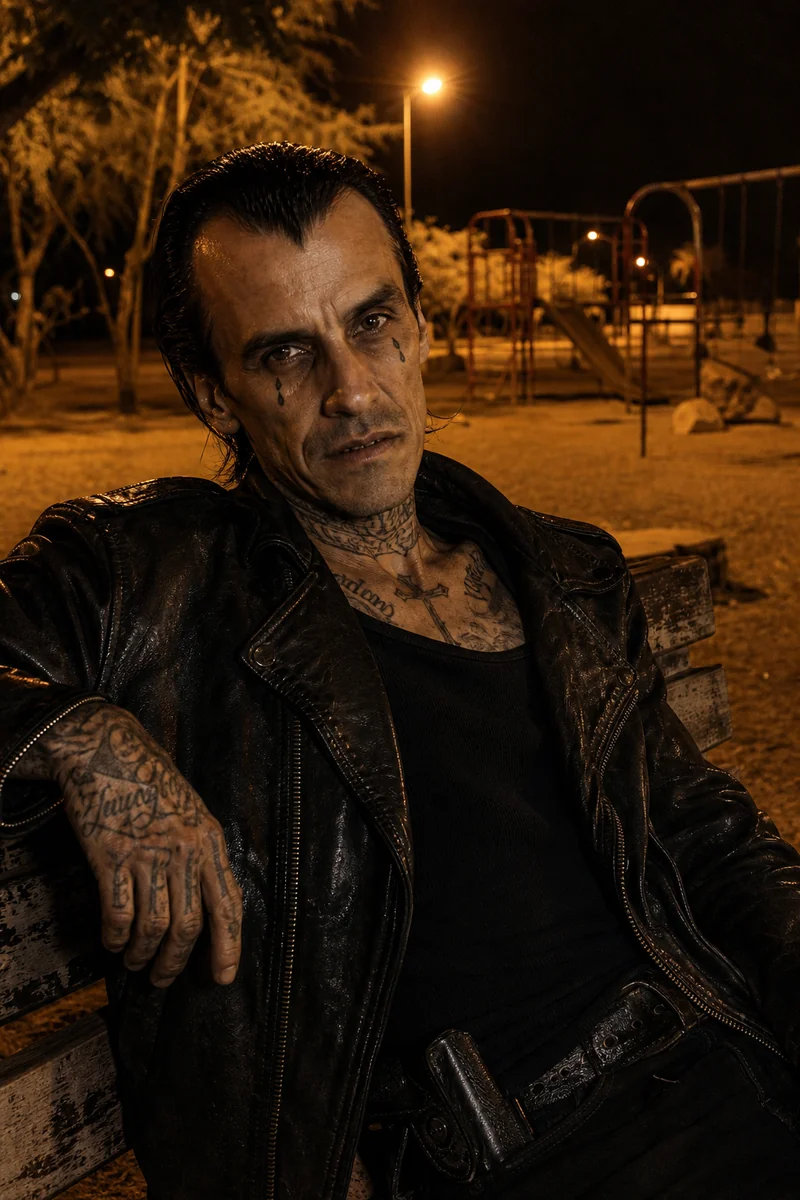
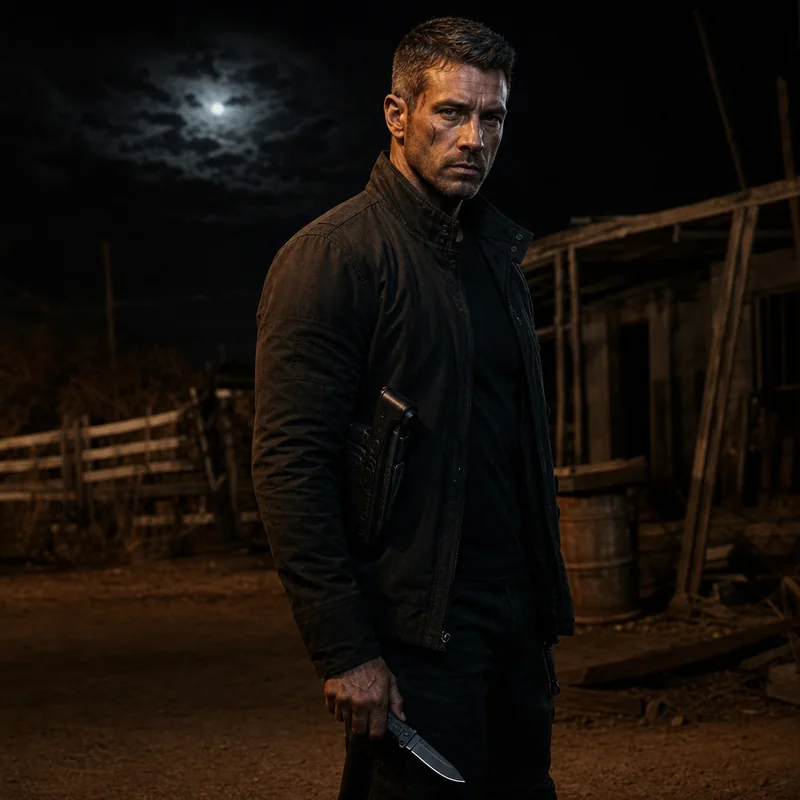
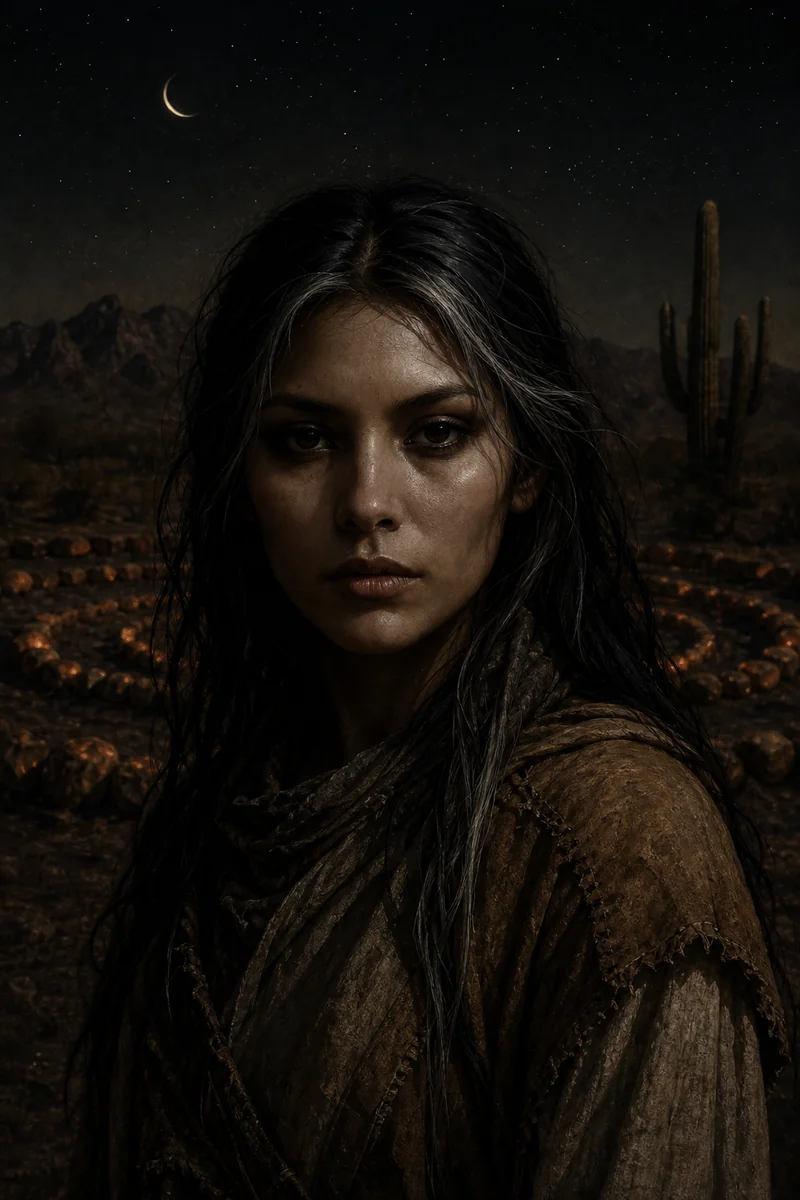
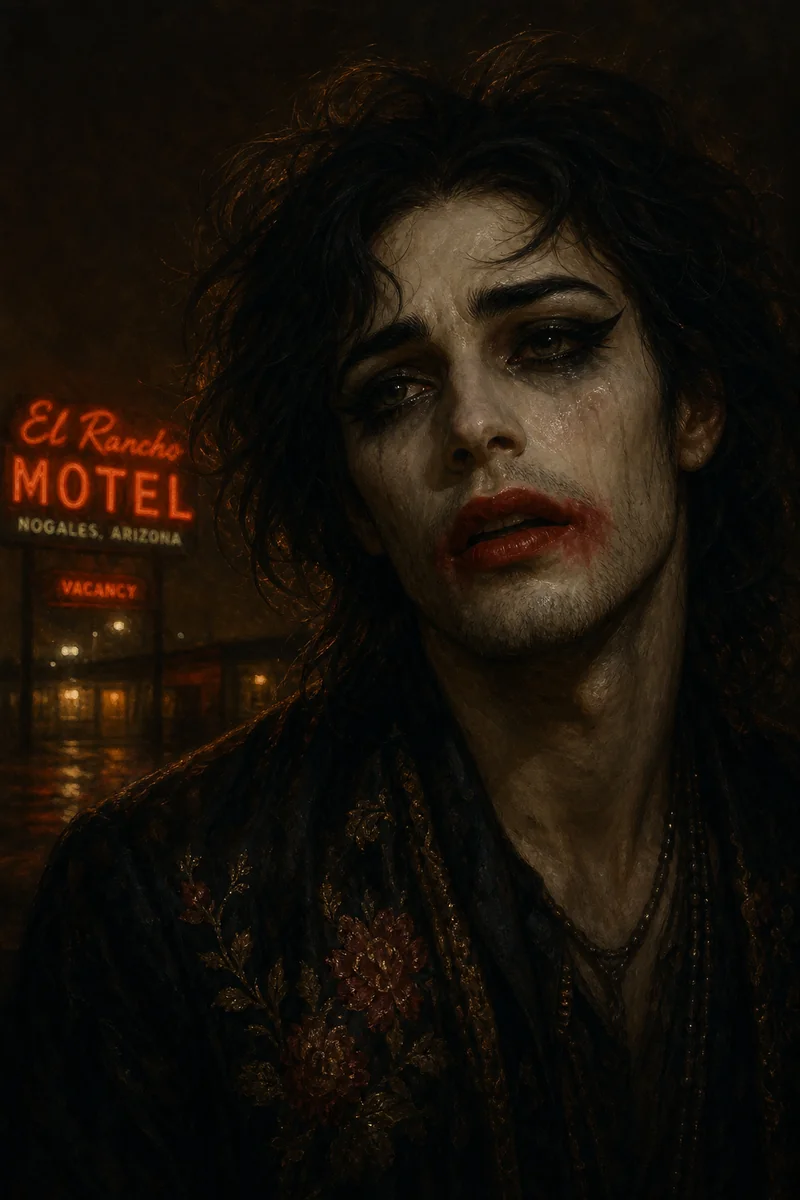
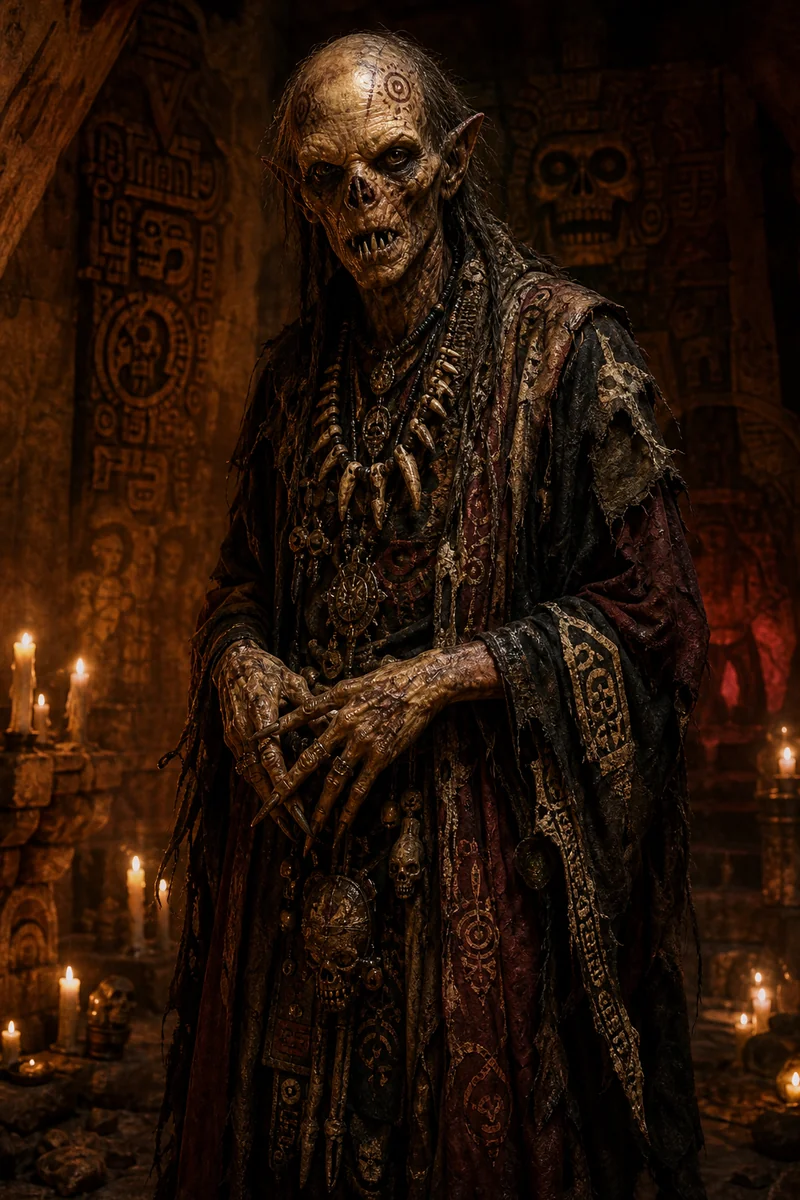
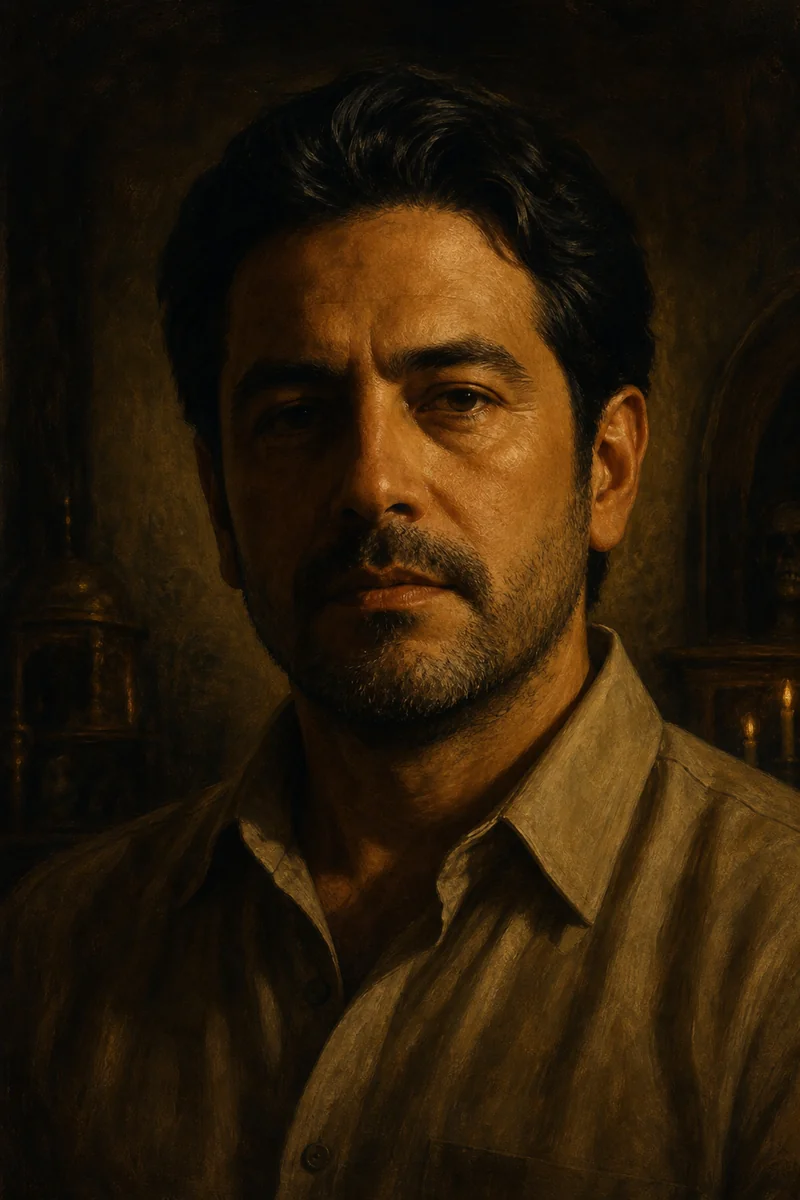
Vampires of Tucson
Tucson is older than anyone admits, and not everyone who arrived here left. These are the ones who stayed.
Coterie
Young women who were trafficked, abandoned, and left to die in the Sonoran dirt. Some of them didn't stay dead. Each book follows at least one of them.
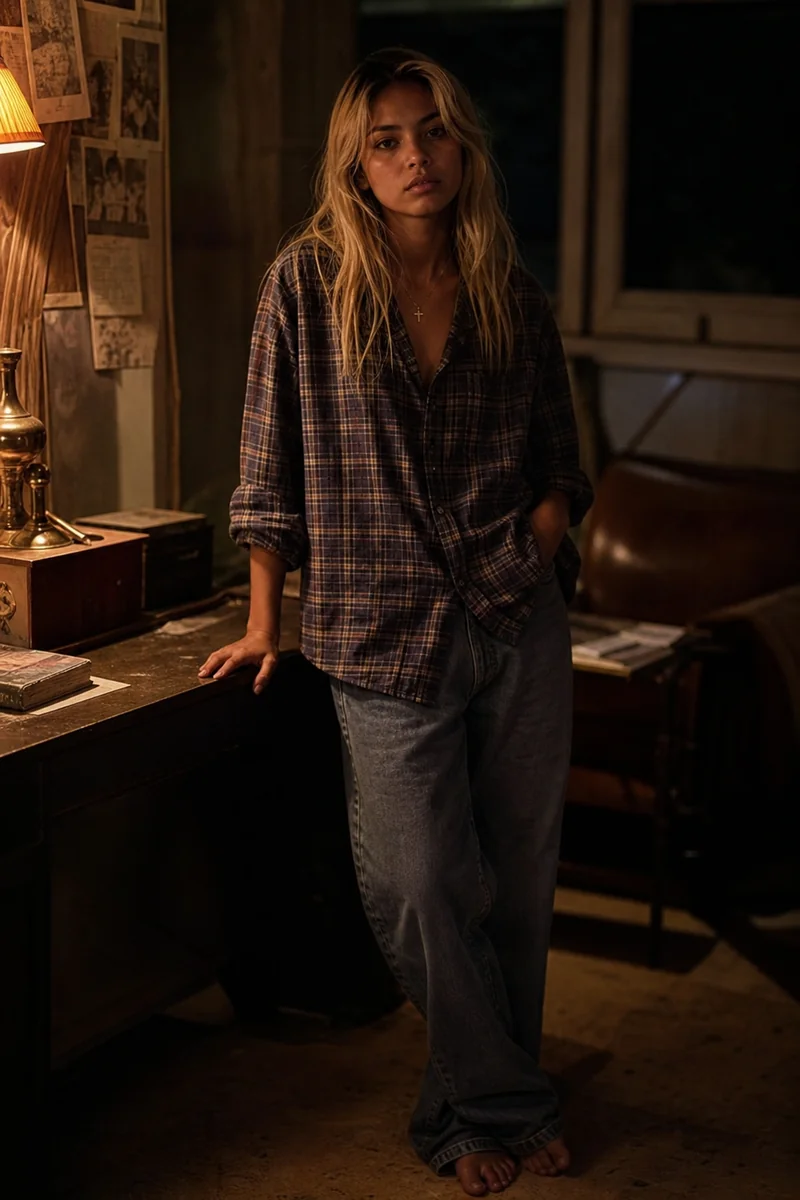
The Girl Who Teaches Others How to Live
“You’re becoming someone who gives a shit, papi. Someone who understands
that protection means more than control.”
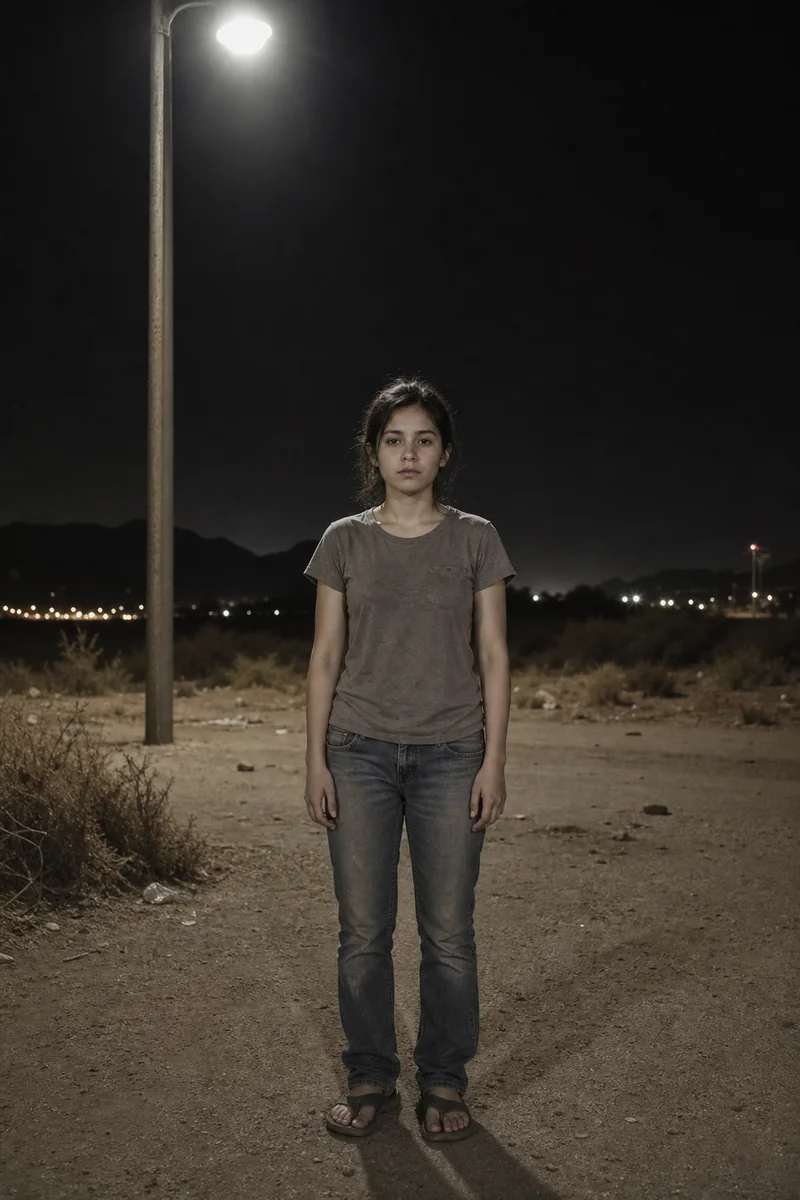
Isabella Martinez was ten when her mother died and her father decided a daughter
could take her mother’s place. She ran at eighteen, straight into the smuggling networks
that turn runaways into cargo, and she did not stop being used until the desert and the turning
remade her into something that could not be used so easily.
She leads the Levantadas now, toward the one thing she was never given: a way to survive
without becoming the next girl’s predator. Cactusflower taught her the limits of that, the
hard way. Love without boundaries is only a softer cage. Protection means mercy and the
willingness to make the cruel call when a real threat walks in.

The Fire That Learns to Burn Without Consuming
“Maybe love is more important than competence. Maybe caring enough to try,
even when you’re scared you’ll fuck it up, is better than letting perfect
be the enemy of good.”
Naida grew up in Managua learning two lessons far too young: that being wanted made
her a target, and that being wanted could be turned into power over the boys who wanted her. When
a crossfire killed her parents at eighteen, the only door left led north, and the man who promised
her a better life sold her to the Sinaloa networks instead. She clawed out of a shallow grave in
the Sonoran Desert with no memory of her turning, only hunger.
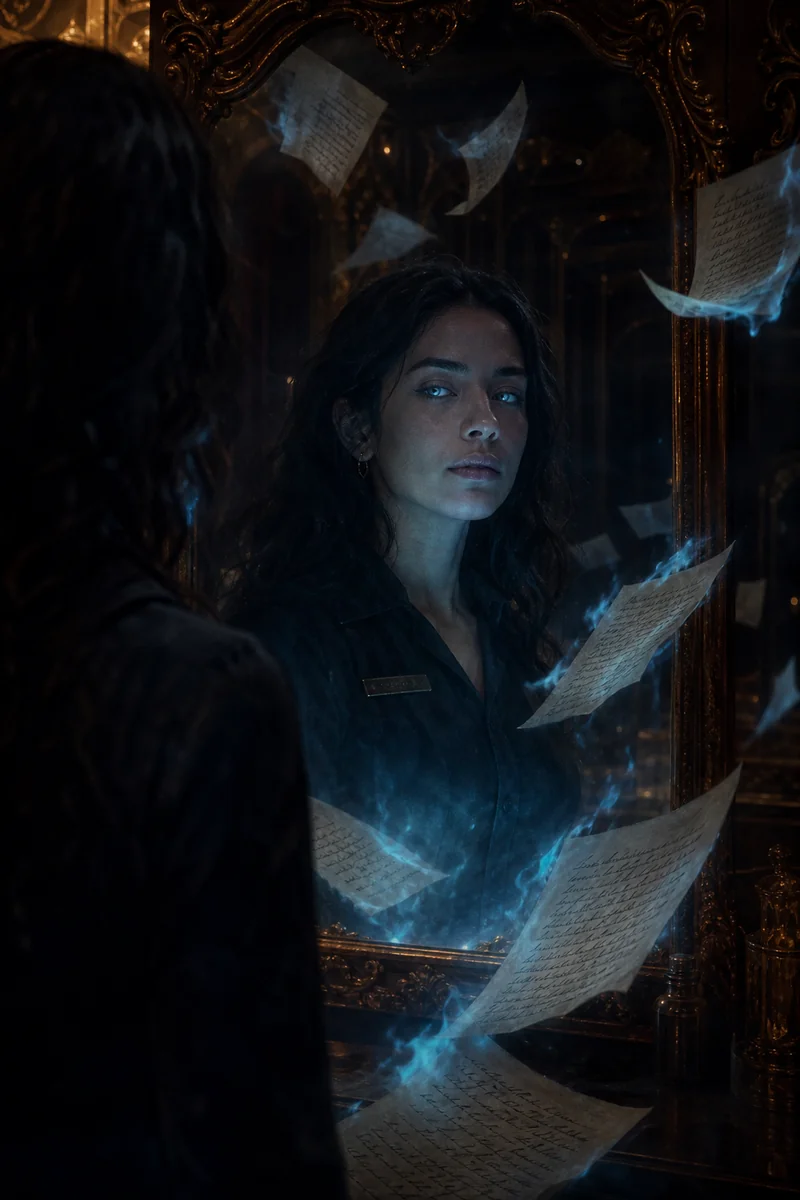
The fire that survived all of that is the same fire that nearly consumed her. Rocket
reaches for manipulation before she knows she is reaching, then catches herself out loud. Book One
is the question of whether she can carry power for the people she loves without it curdling into
the predation that made her. She talks it through with the one witness she trusts: her own reflection.

Compulsive Liar
“A woman will lie about anything, just to stay in practice.”
Born in Bogotá to a mother who vanished like smoke, Blondie was raised by the
orphanages, the shelters, and the men who promised protection while they taught her otherwise.
She learned by ten that a well-timed smile was worth more than a scream, and that the world only
invests in a girl who can make herself seem special. She dyed her hair electric blue the first
time someone told her she was pretty enough to be famous.
The modeling contract that promised fame delivered her to a Motel 6 in Nogales instead.
She lies about everything, reflexively, because a lie is a lock and the truth is a key she will
not hand anyone. Trust, to Blondie, is leverage, never loyalty. She will also die for the people
she loves, a list she keeps deliberately short, and one name on it is a runaway in a Tucson group
home she visits in disguise and pretends not to care about.
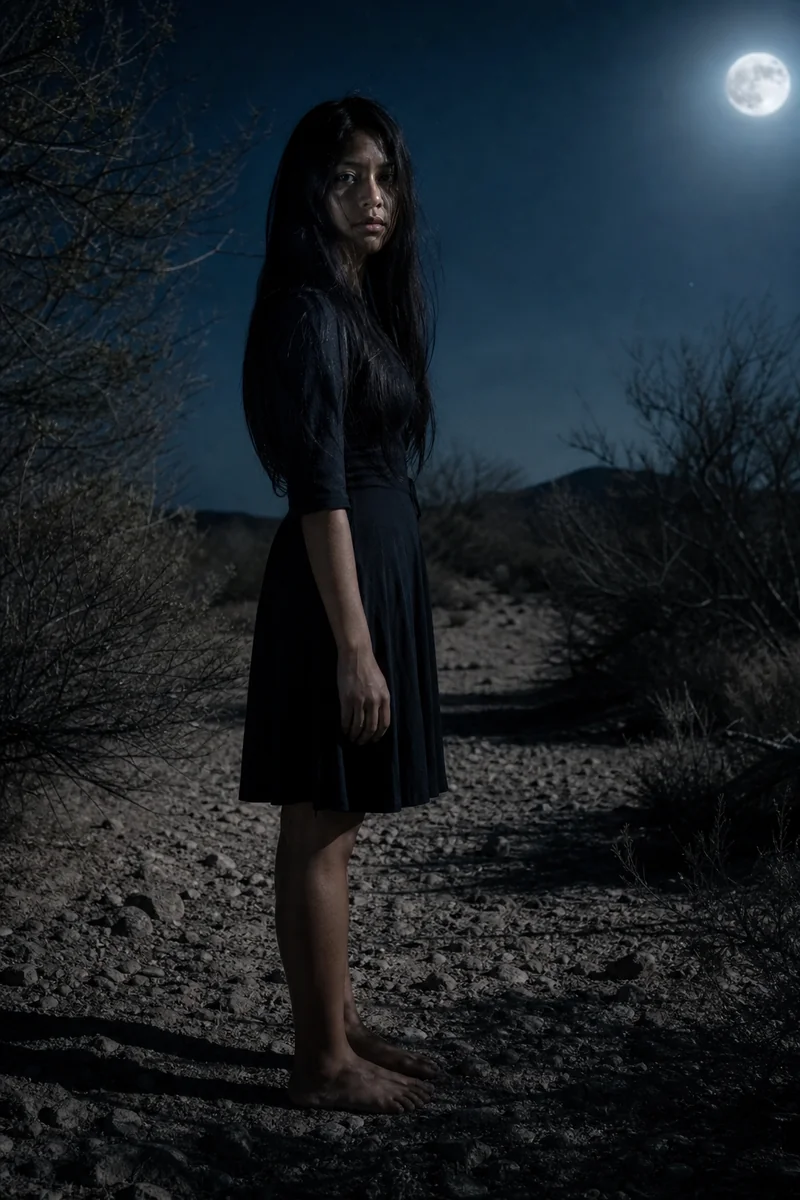
Daughter of the Mountains, Keeper of Wounds
“I give of myself, not because I want to, but because you don’t
give me a choice.”
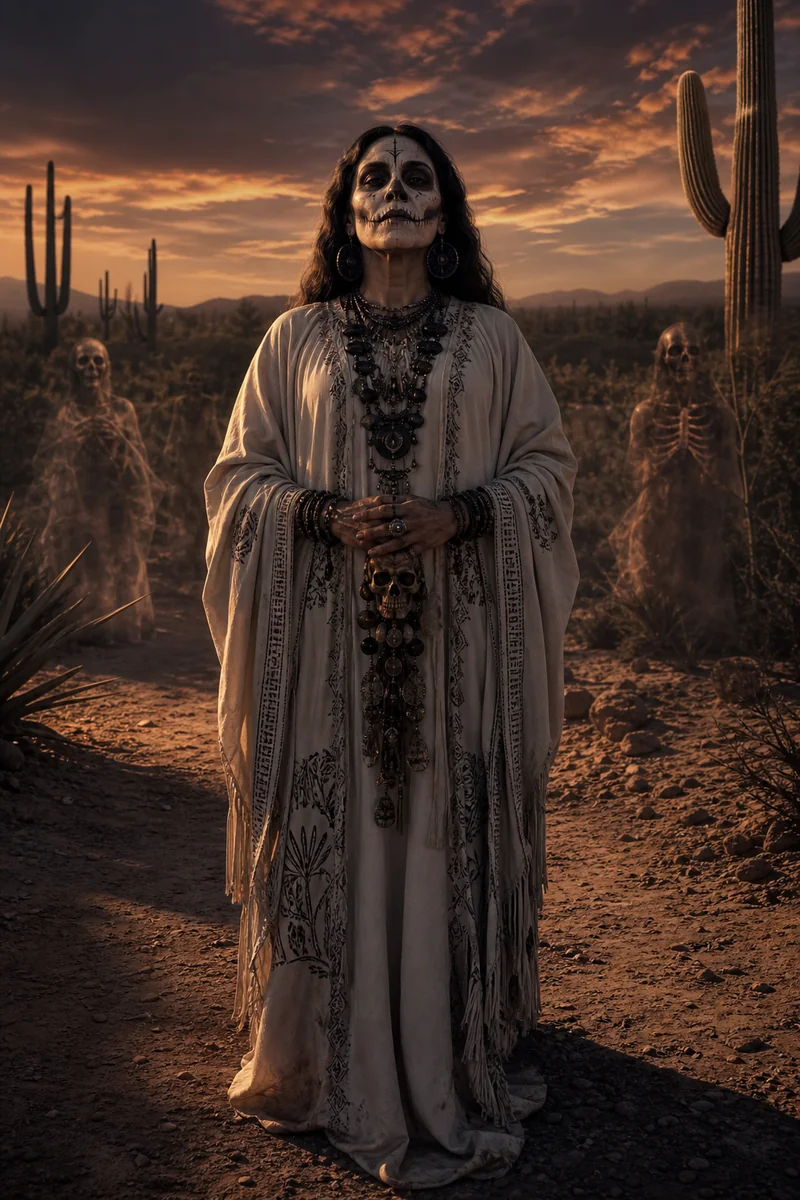
A healer out of the Salvadoran mountains, Copal watches over the Levantadas without ever claiming them, because she believes in care, not control. She eases other people’s suffering even when it deepens her own, the way she always has.
Once she spent days negotiating with a predator while he terrorized her family, until Abuela had to do the thing Copal could not. She does not make that mistake twice. Now, when someone harms one of the girls, the answer is not diplomacy but something immediate and surgical. Her vengeance is not rage. It is ritual, born from remembered failure.
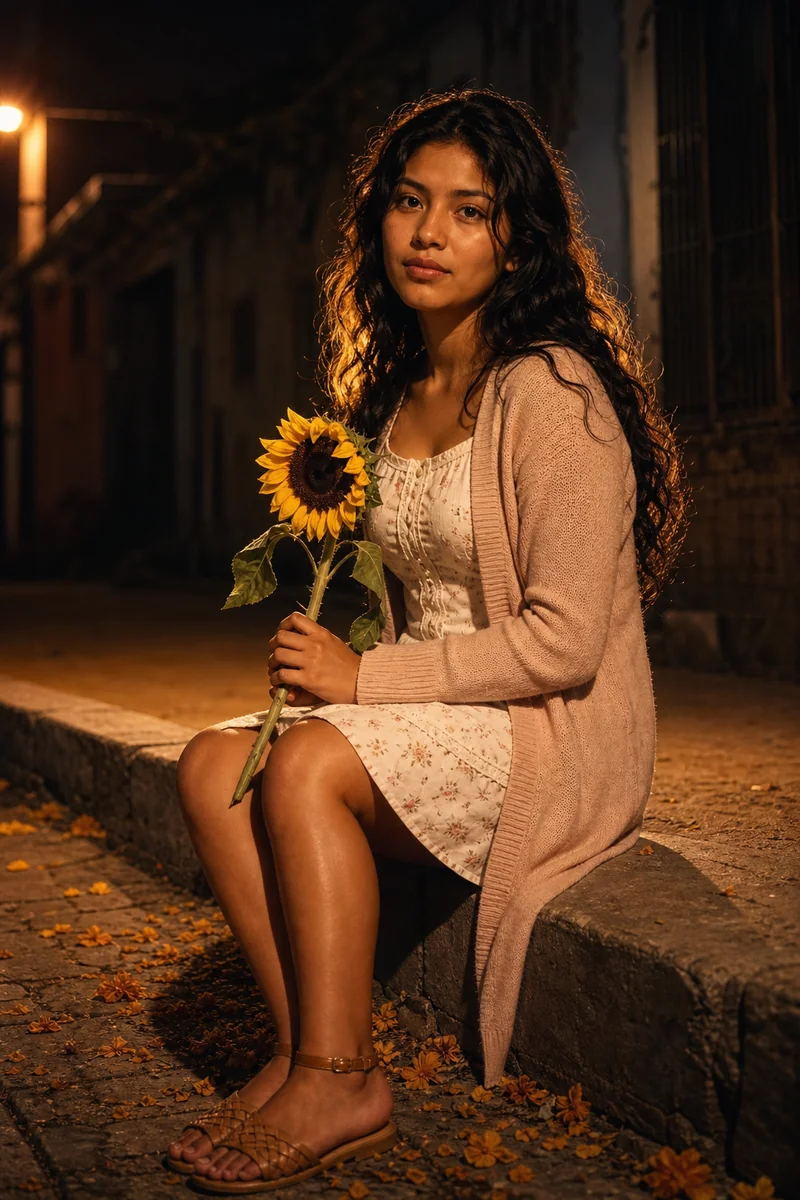
The Thorn Beneath the Halo
“If I don’t believe in something, I become like them. So I choose
to believe in mercy — even when it hurts.”
Guatemalan, raised in the shadow of a curandera grandmother whose rituals still reach her from a continent away, Marigold carries beauty and mercy through a world that has shown her neither. She is the thorn beneath the halo, gentle until gentleness stops being enough.
She has one rule she will not break: never become what was done to you. It costs her, because the easier road is always cruelty, and cruelty is what she was taught. She remembers Mateo, the boy she could not protect on the road north, and his memory is why she keeps choosing the harder kindness.
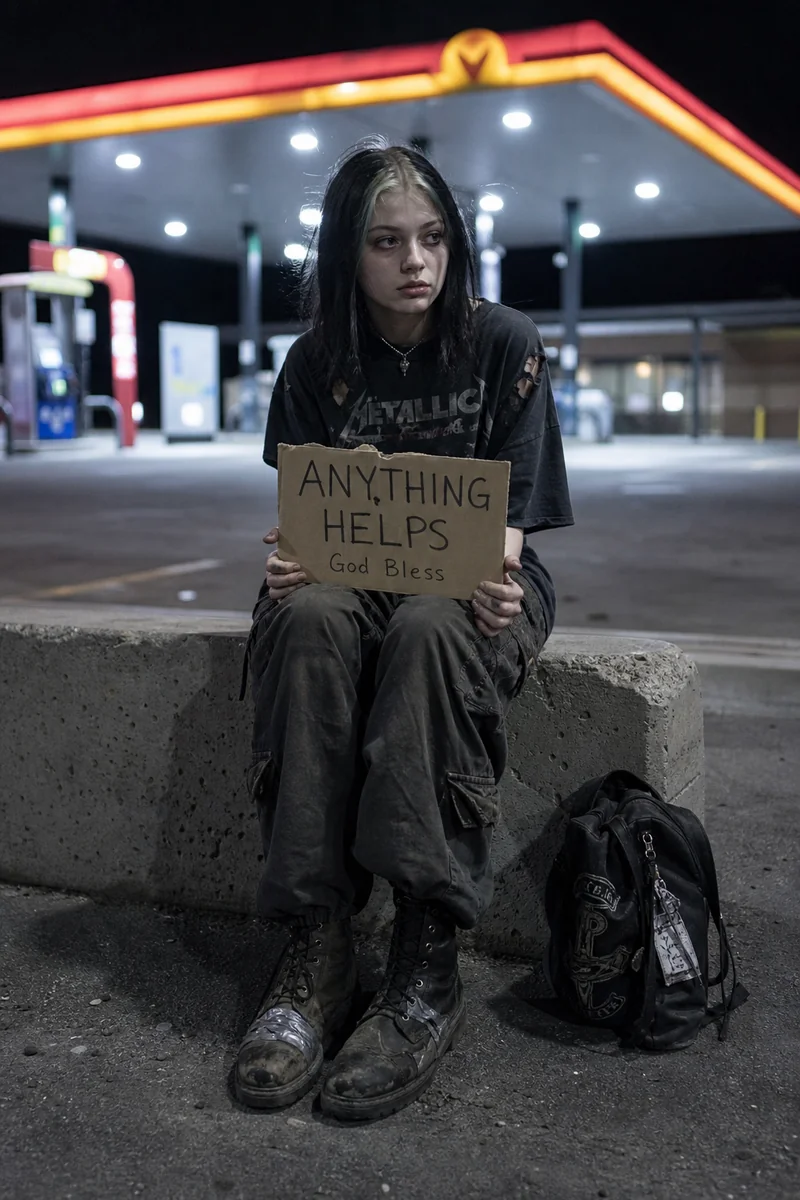
The Lost Daughter
“Some wounds can’t heal, no matter how much love surrounds them.”
The girl the love could not save. Cactusflower came up the same road as the others, but the wound she carried ran deeper than anything the Levantadas could reach, and they learned the hard limits of healing by failing to heal her.
Home was the only thing she ever wanted: her father, a sense of belonging, some quiet the world kept refusing her. She remembers riding her bike through Tucson before the turning, back when home still seemed like a place she could get to. Some wounds, she proves, do not close for love alone.
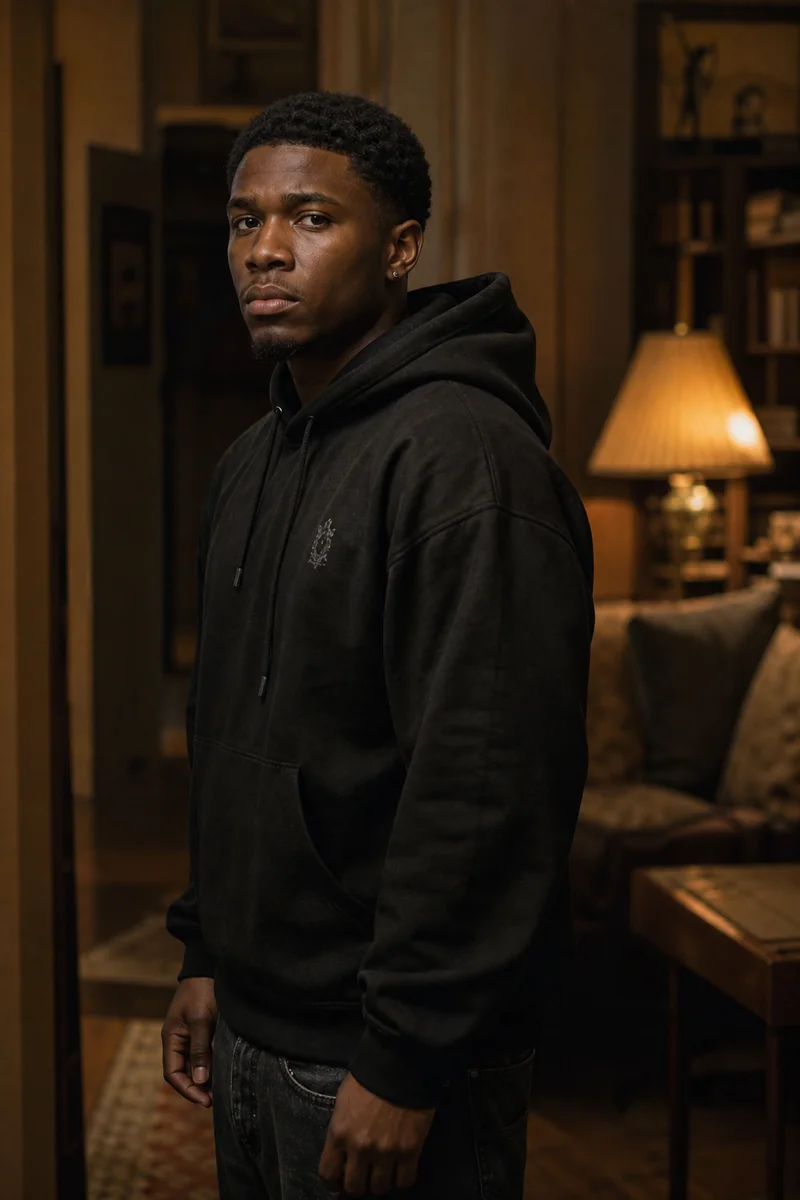
He Was Wrong About Which Side He Was On
“This is my place. Question is, who the fuck are you?”
He used to prey on women. Found them young, desperate, alone, and
made sure they stayed that way. Then Babydoll found him. She didn’t
kill him. She took him. Now he belongs to her in every way that matters,
and she’s teaching him slowly, with no mercy, what it felt like to be
the one who couldn’t run.
The Elders
Tucson is older than the state. Older than the territory. The vampires who hold it have been here long enough to remember when it was called something else entirely.
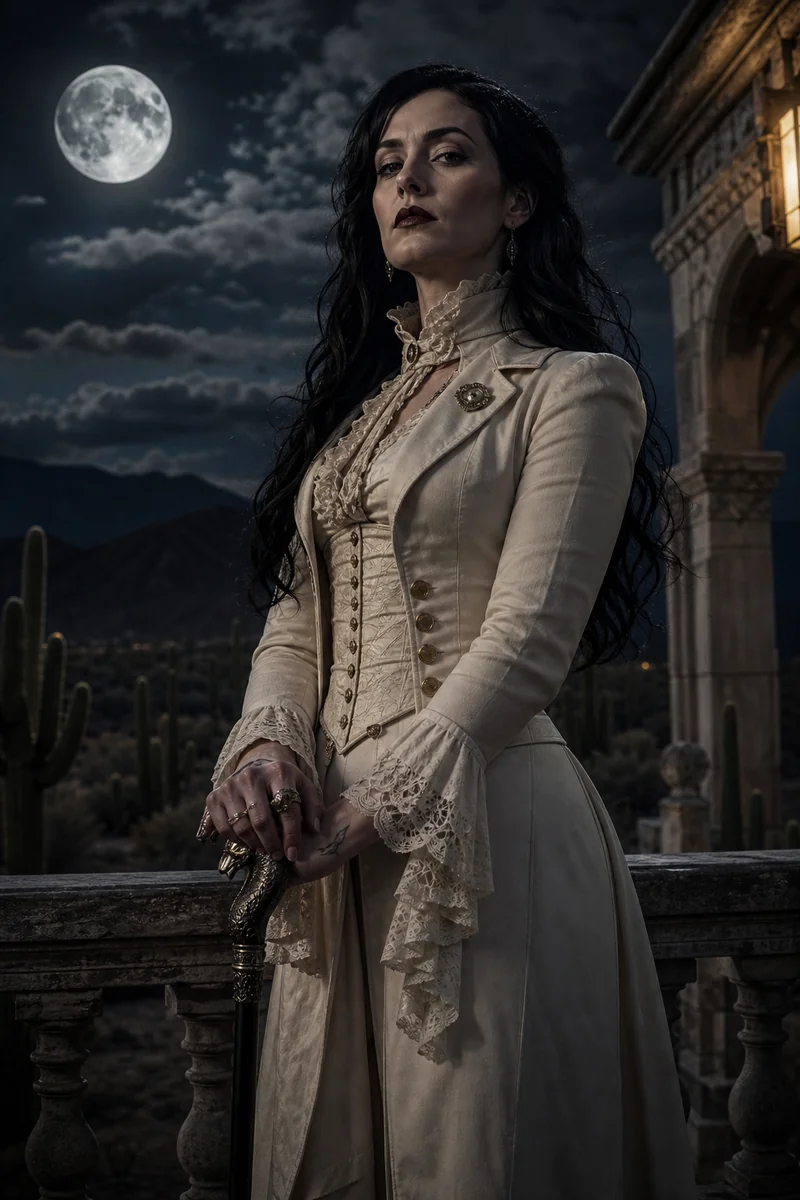
The Pirate Queen of the Desert
“Freedom is earned with blood, doubloons, or cunning — take
your pick.”
Tucson’s oldest Elder and its most dangerous. She has survived long
enough to watch every other claim on this city come and go.
She was made in 1697 by Sings-In-Woods, her sire and
the oldest friend she has, the one she mourned for a hundred and fifty years before learning
the grief was a lie.
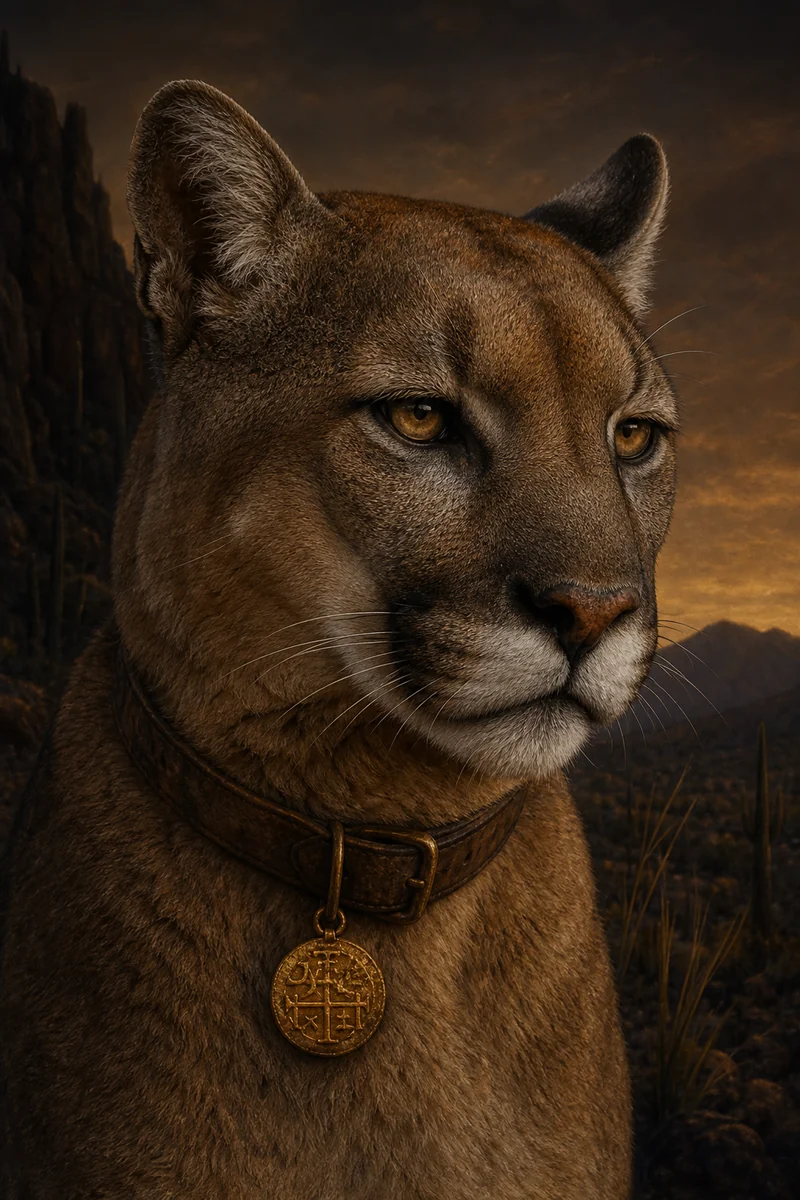
Betsy’s Shadow
“Chirp.”
Not an Elder, but she has outlasted most of the vampires in Tucson. Betsy Bishop
pulled her from a poacher’s trap in 1875 and gave her blood instead of a mercy, and the
mountain lion has been at her side for the hundred and forty-nine years since.
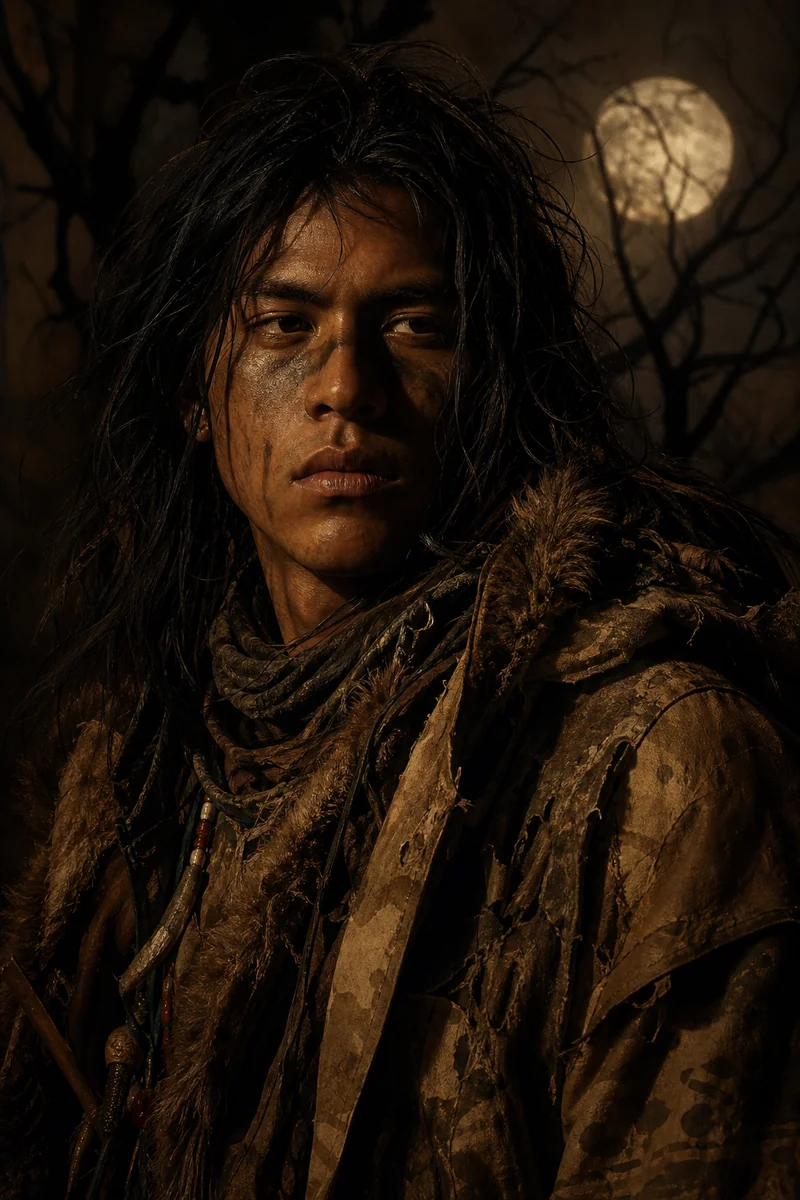
She wears a Spanish doubloon from Betsy’s pirate days on her collar, treasure as
a property marker and a warning. When Betsy needs to think aloud, to grieve, or to decide
something she can say to no other vampire, she says it to Portia. The chirp is the only answer,
and it has always been enough.
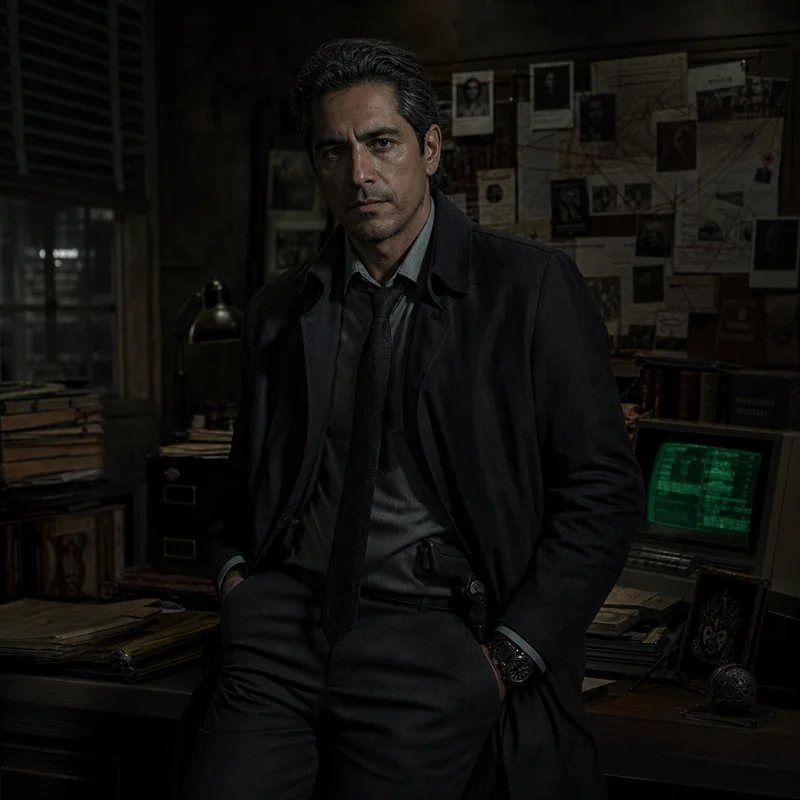
Private Detective
“Death smiles at us all. Best we can do is smile back.”
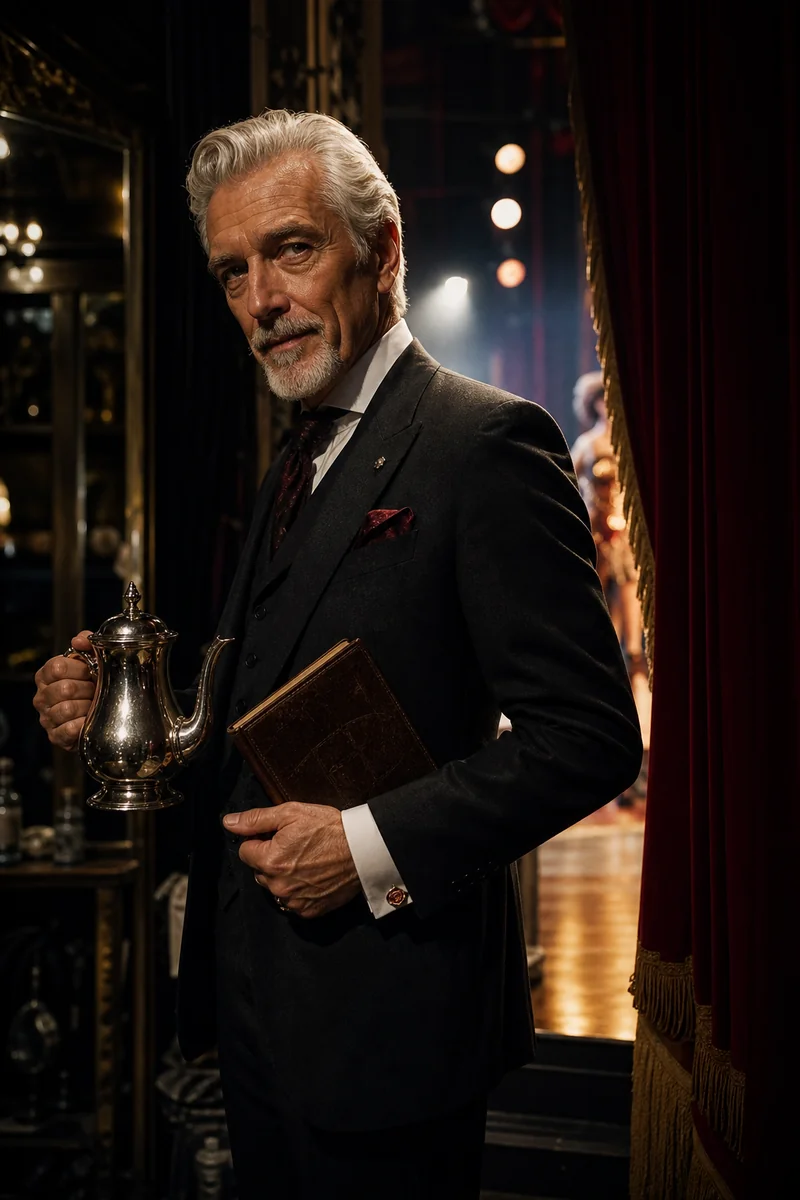
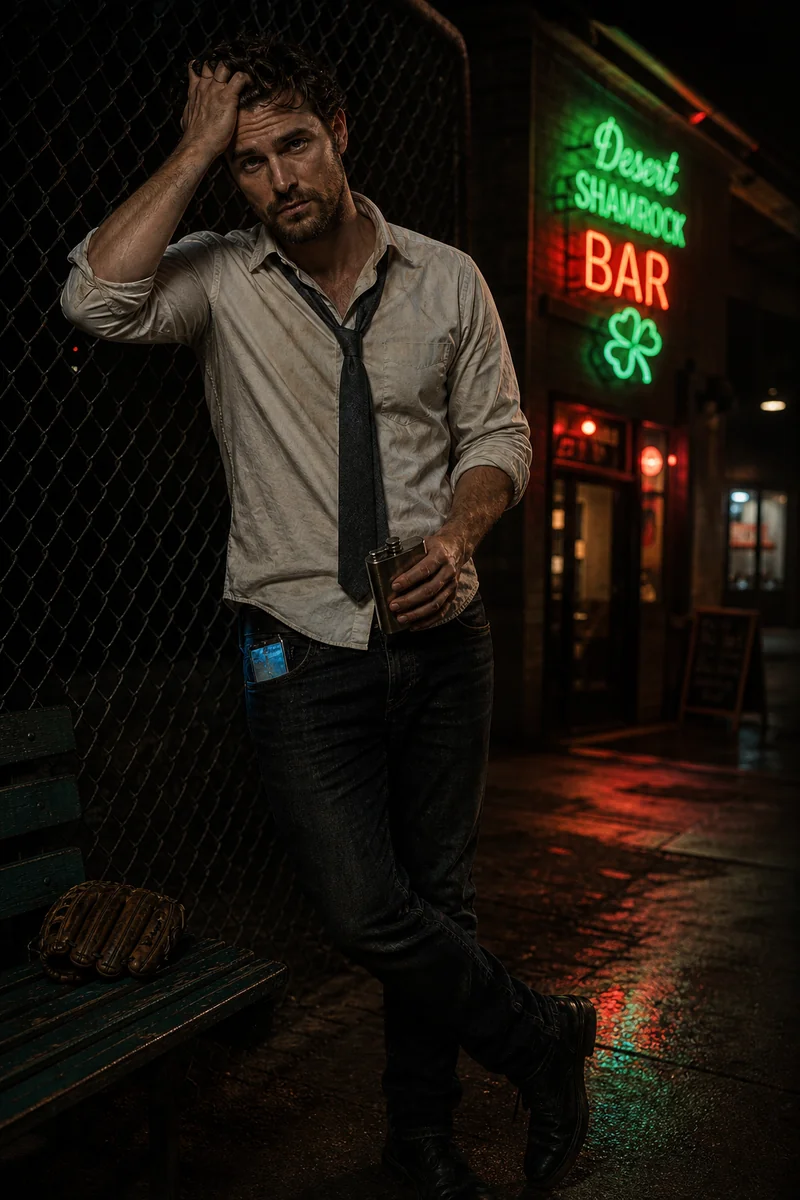
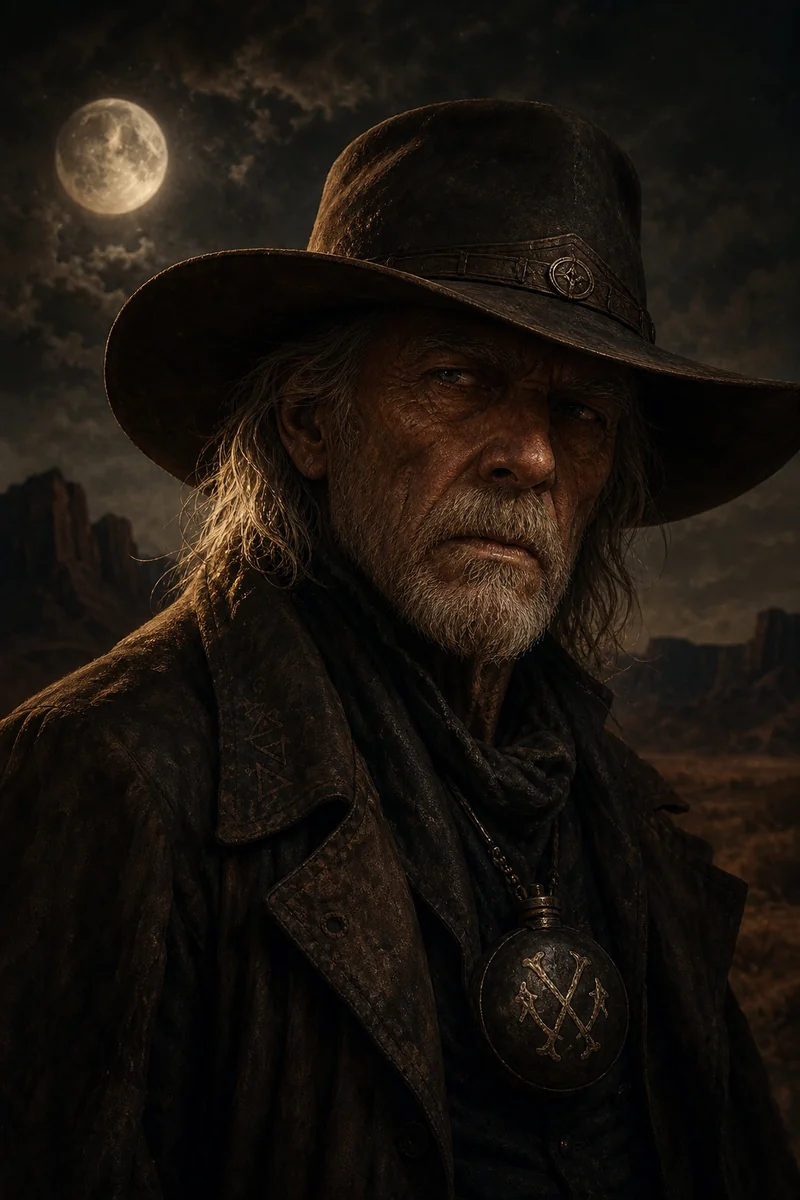
Born Domingo Aparicio, dead in Chicago as far as his family knows, he took a friend’s name and a private detective’s license and never looked back. Ulysses DeJesus has worked the Tucson underworld longer than most of his clients have been alive, building an empire of secrets he intends to outlast death itself.
No secret stays buried forever, he likes to say, and he would know, because he keeps them all. He watches a younger sister from the shadows and helps her hardest cases anonymously, and confesses to a priest who does not recognize the voice behind the screen. It is the little conscience he has left. He smiles back at death anyway.
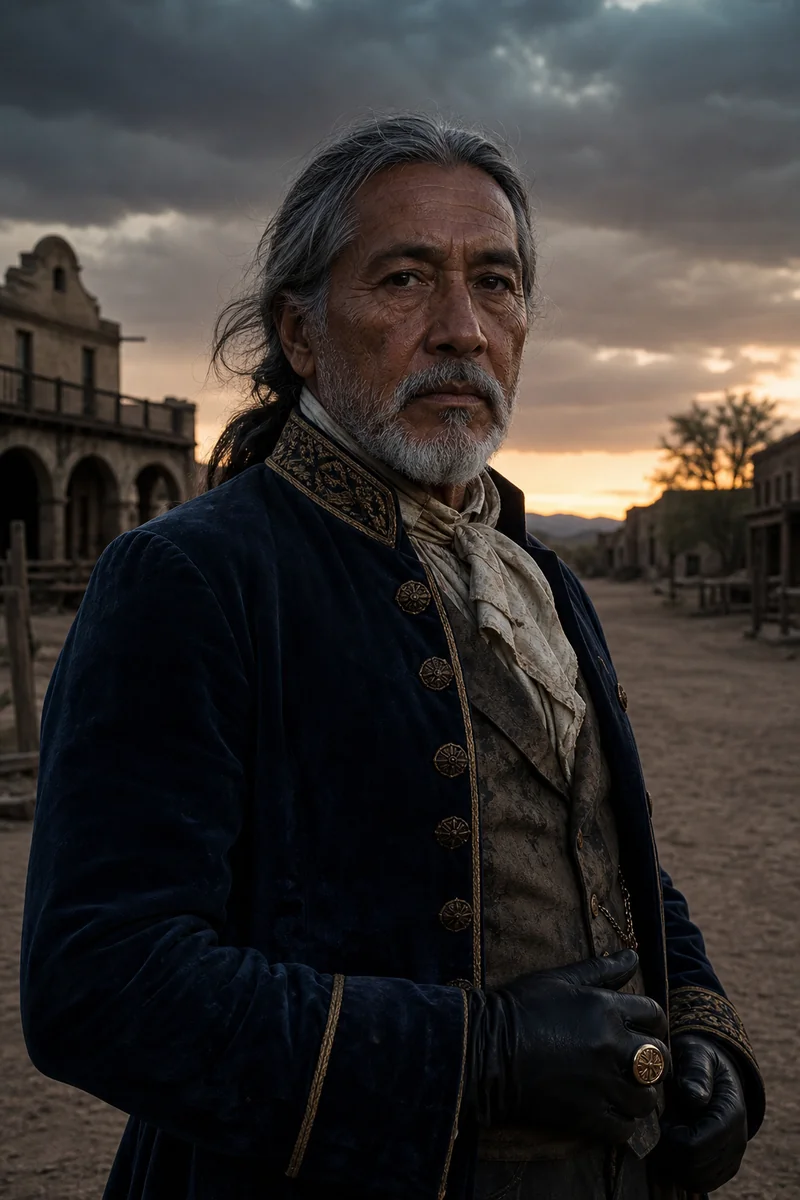
The Man Tucson Forgot
“They gave me the silver spike — and drove it through my heart.”
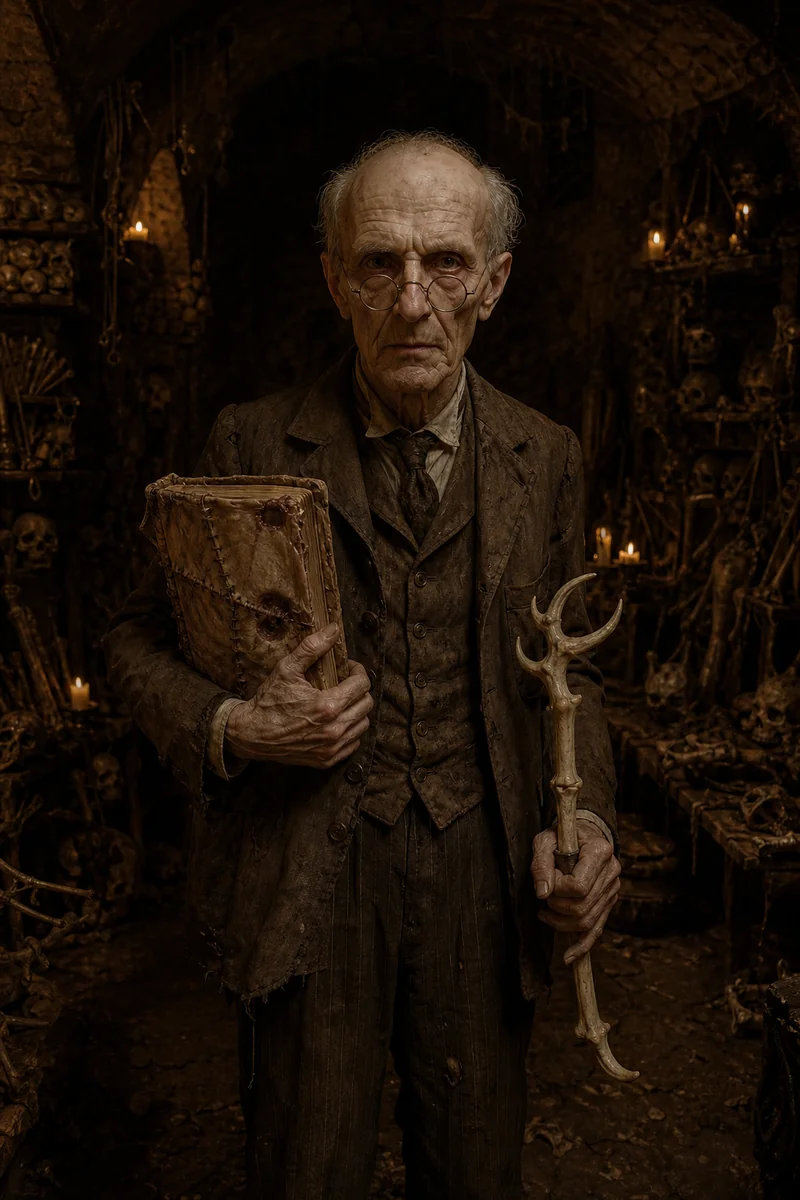
He built the university and never the fortune, and paid for that choice with a name Tucson eventually forgot. Estevan Ochoa was a real power in this city once, and he has spent the long years since making sure the place he loved is not erased even as he is.
He keeps his word, always, and he keeps the records. A mortal historian reveres him as a local hero without knowing he is still here to hear it; a struggling descendant of his old business partner stays afloat on anonymous help she cannot trace. He leads what remains of Old Tucson, the memory of a city that moved on without him.
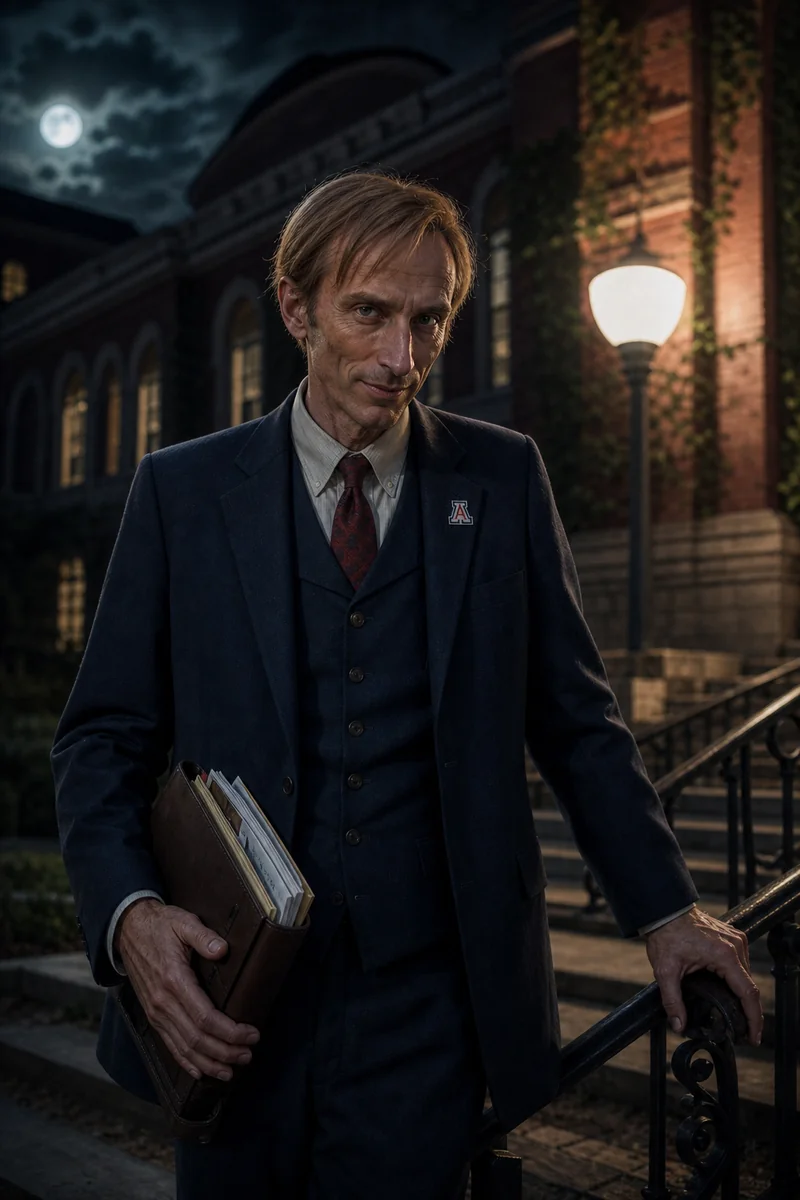
He Brought the University, Not the Capital
“Sometimes progress looks like failure to small minds.”
He brought the University of Arizona into being and never the capital to match it, and that imbalance is the wound he has nursed for over a century. C.C. Stephens believes the world runs on perception, and that silence is usually stronger than truth, so he works quietly, through scholarship and money that never carries his name.
A librarian thinks him a patron; a disillusioned professor never learns who funds his work; a student activist reminds him of everything he once stood for and failed to protect. He is trying to redeem a legacy through influence so subtle no one will ever credit it to him, which is exactly how he wants it.
Child of Tenochtitlan
“As a Necromancer, I have a near endless supply of new friends.”
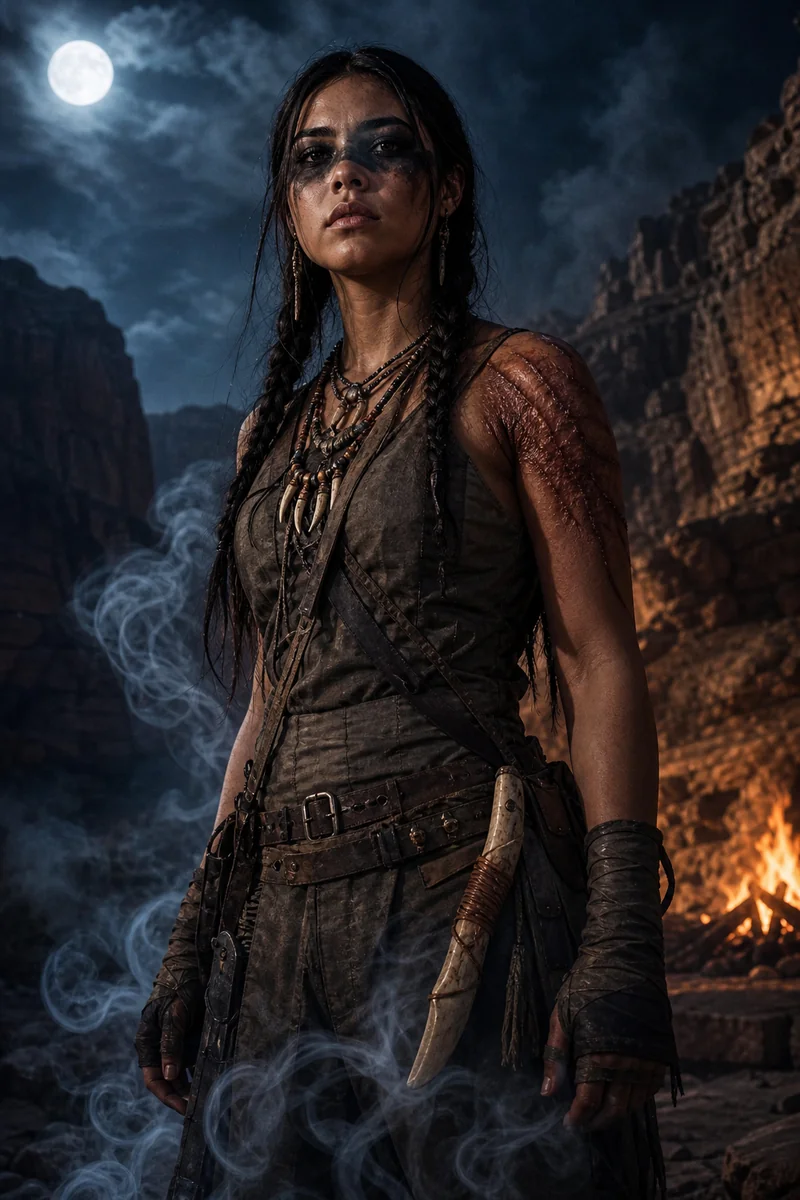
A daughter of Tenochtitlan who has carried a sixteenth-century Mexica mind into the present, Mireya tends the dead the way her people did before the conquest taught the living to forget. To her the dead must be respected, never spent as tools for vanity or profit, which puts her at odds with most of vampire society.
She leads the Rez and guards its people from the shadows: leaving offerings for a gravedigger who keeps the old reverence, steering the dreams of a curandera who teaches the traditions, watching over an orphaned girl on the reservation who recalls the daughters she never had. She is restoring a balance the world broke, one quiet act at a time.
Coterie
Tucson had owners before it had streetlights, and some of them are still collecting. The coterie answers to Elder Estevan Ochoa. Ulysses DeJesus serves Betsy Bishop across Tucson as her head of intelligence and mostly runs his own line, but anything inside Old Tucson puts him under Ochoa. John Christian runs with them too.
The Ledgers of Loyalty
“Elder Ochoa sees the past. I make sure he survives the future.”
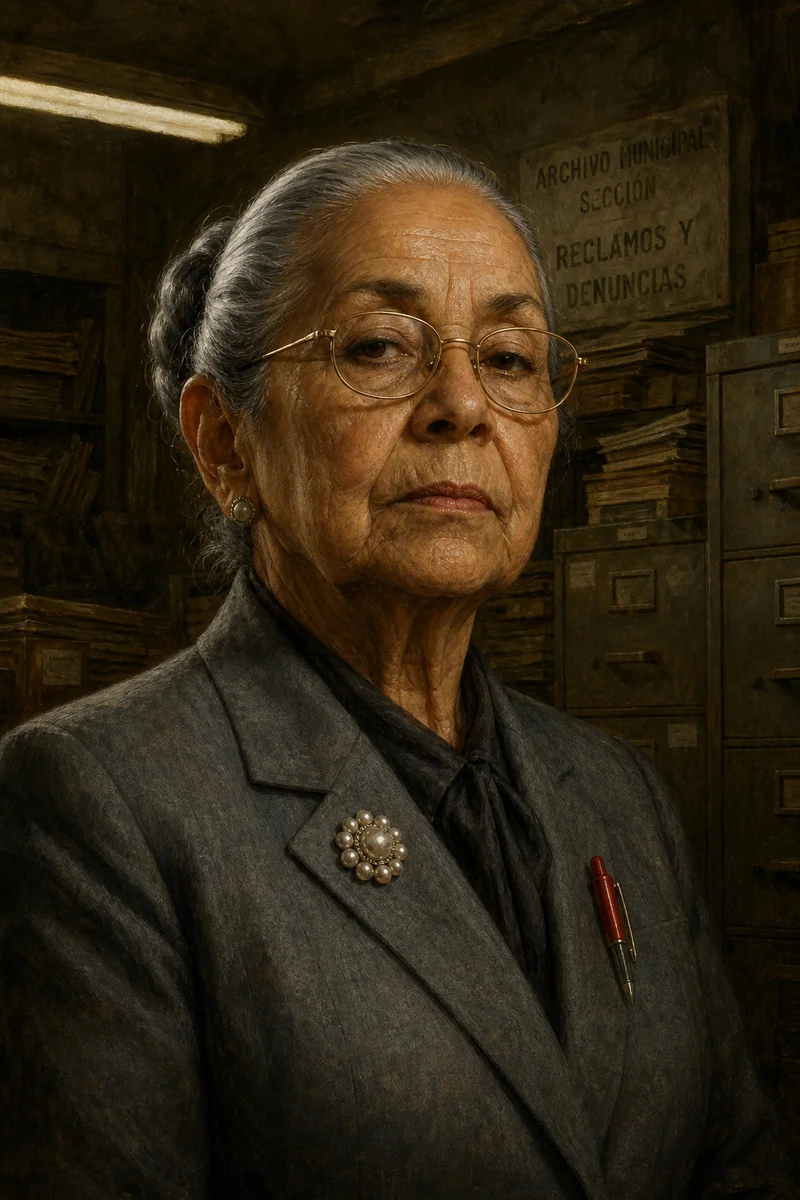
Ochoa’s archivist, fixer, and memory. She keeps the Elder’s ledgers, the
ones with names in them, and she has spent a long lifetime making sure his legacy stays
untarnished, even when he will not.
She plays cards on Sundays with the nun who taught her as a child, feeds anonymous
tips to a young journalist chasing county corruption, and watches a great-nephew climb the
city bureaucracy like a board she is still playing. Everyone she protects is also a quiet
test of whether anyone left still deserves it.
The Writ Bleeds Ink, and Blood
“Justice is a ritual. Violation has its price. I’m here to collect.”
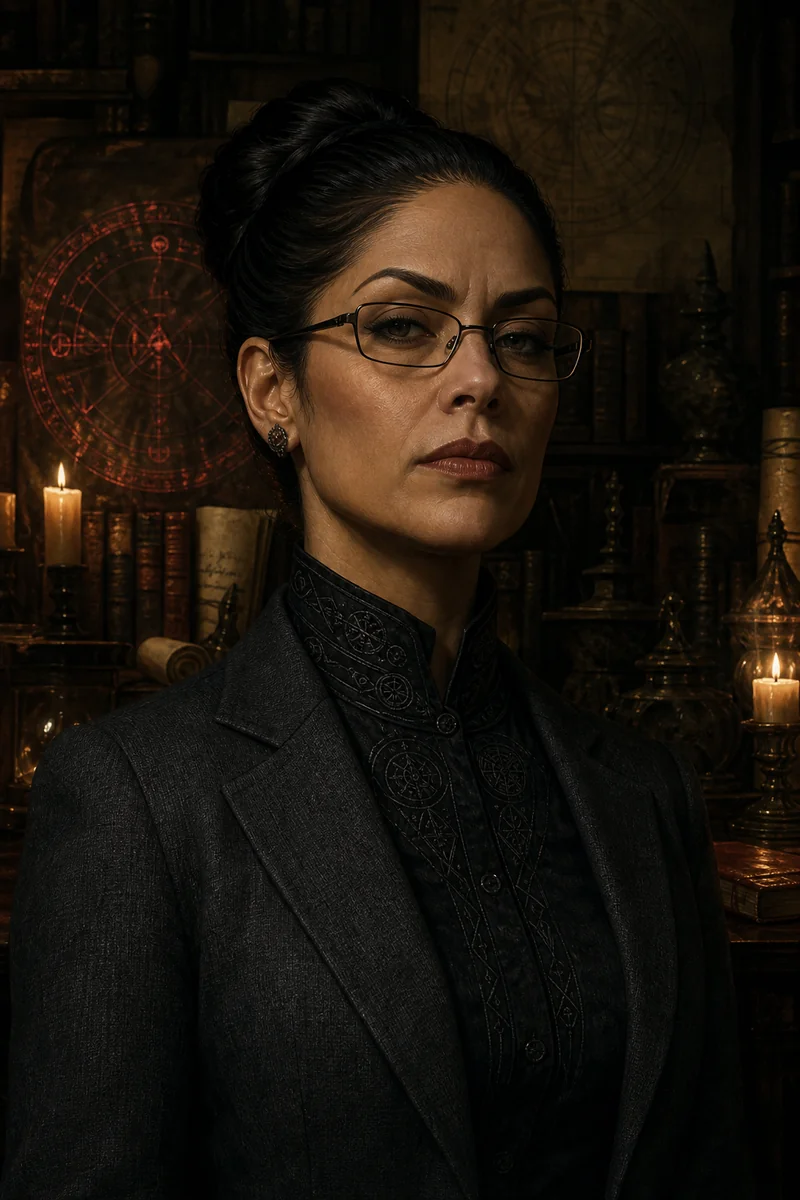
A daughter of Barrio Hollywood who learned the law as a mortal and never stopped
believing in it, even after she stopped being able to die. She is building something
slower and more dangerous than power: a body of blood-covenant law precise enough to
outlast every Elder who holds the city now.
She tells herself she does not want the throne, only the thing that makes the
throne accountable. She has noticed those might be the same want. She has filed the
observation, and not opened it since.
The Matchstick Messiah
“Burn it down. If it mattered, it wouldn’t catch fire so easy.”
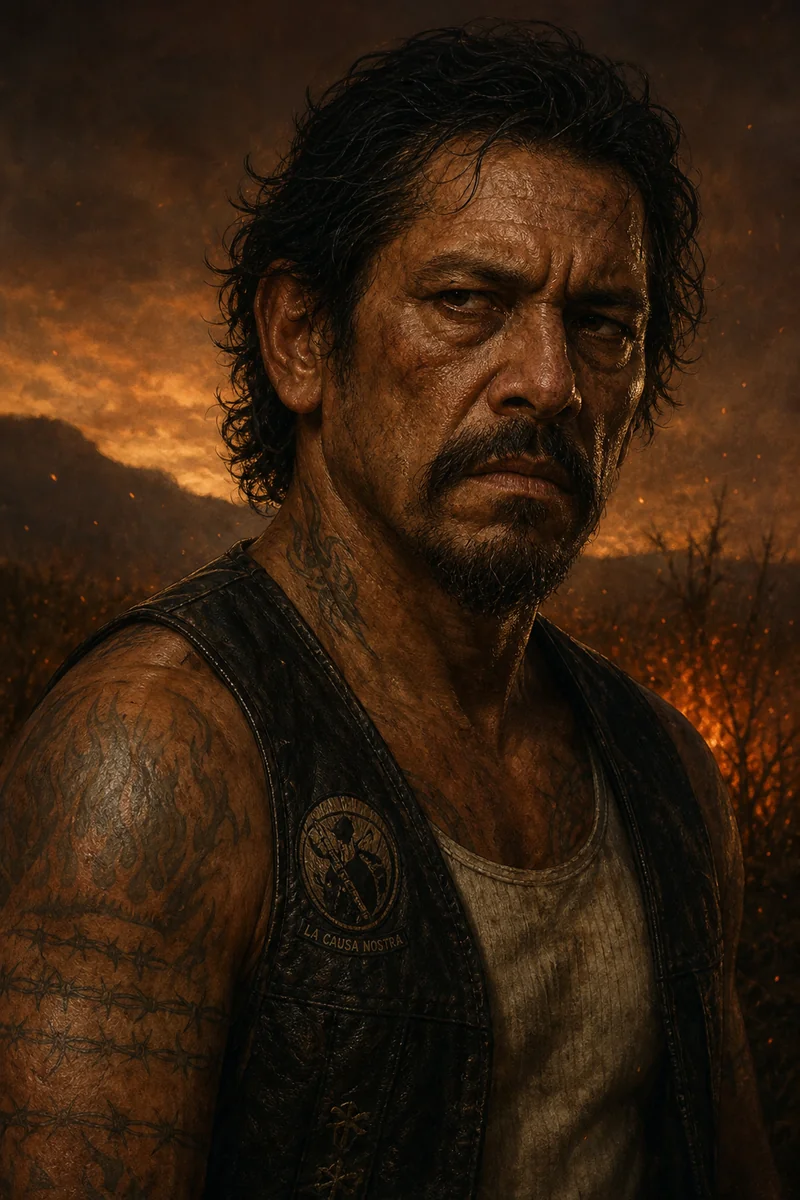
Out of Douglas with prison ink and burn-scarred knuckles, Ramón is the lit
match the rebels keep reaching for. He wants the old revolutionary fire back in Tucson,
and he is not particular about what has to burn to start it.
Underneath the gospel of arson is a man watching a younger brother from a distance,
protecting without interfering. He has broken every bone he has, and took the wrong
lesson from all of them. He knows it.
Coterie
Half-turned vampires. Weaker than a full turn produces, and charged to eliminate other half-turned as a way to keep the numbers manageable. They were built for violence before they were made into something worse. Five vampires who hunt other vampires. The desert is their territory. Ask who sent them and they’ll change the subject.
Last Man Out Every Time.
“They call it post-traumatic stress. I call it seeing clearly.”
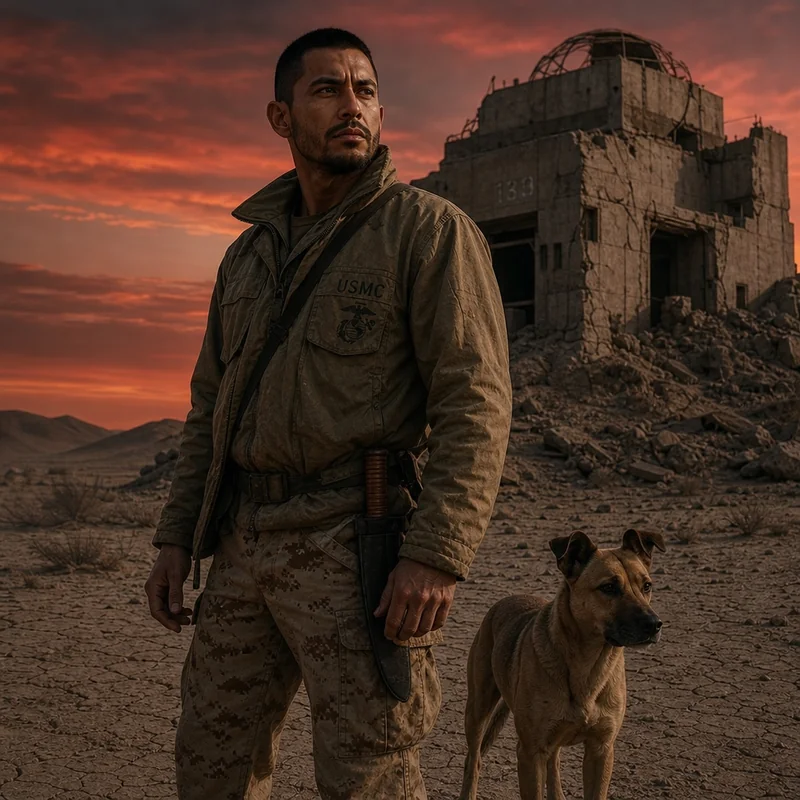
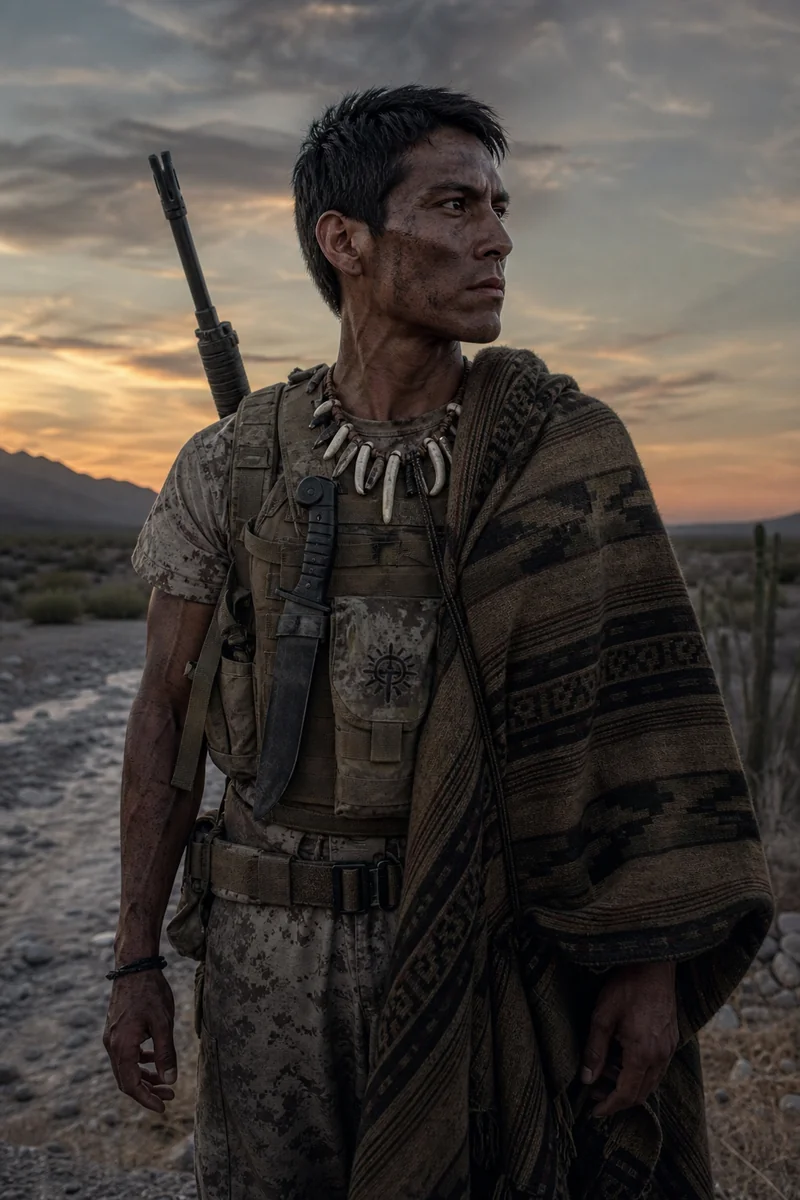
A Marine who survived whatever happened at White Sands and came out the other side a vampire, Bones Martinez carries one rule across the line between life and undeath: no one gets left behind. He built the Hunters out of the cast-off and the cornered, because the strong are supposed to defend the weak.
Out in the desert he keeps a hidden memorial for the team he lost, leaving blood offerings and swearing he hears their voices in the wind. He steers a historian gently away from the truth that got them killed and watches over a fellow veteran who never knew he survived. Last man out, every time.
Burn Fast. Burn First.
“Let them think it’s love. It makes the bite easier.”
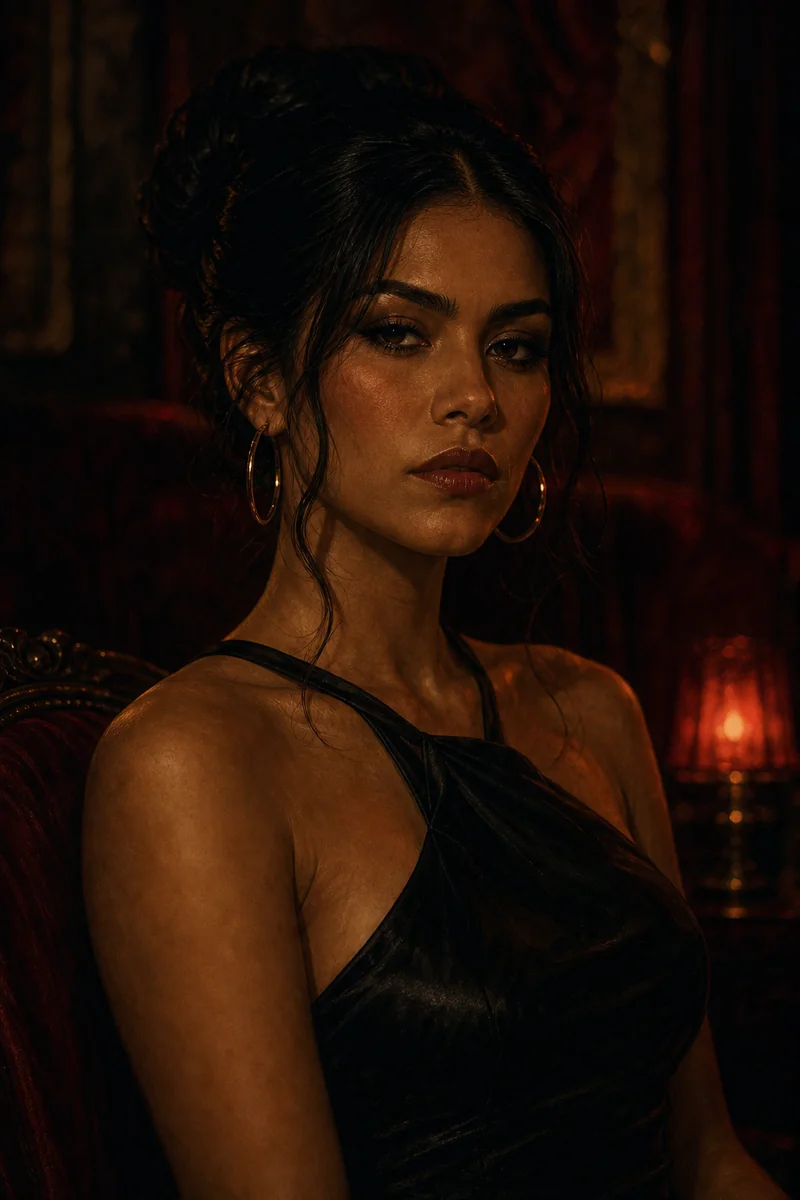
Burn fast, burn first, before anyone gets the chance to burn you. Dani Quezada is young to undeath and in a hurry, chasing the strength to stop being one of the weak ones, using whatever she has before the world can take it from her.
She never loves without an exit plan, which is the kind of rule you only make after love has cost you. A club promoter she saved from an overdose still calls her Angel; the woman who took her in after her mother’s funeral thinks she is dead; a late-night DJ calls her baby on the air, never knowing she is always listening. She does not intend to stay weak.
Quiet Doesn’t Mean Kind.
“You step wrong, and I decide if you keep breathing.”
She came out of search and rescue, the work of finding the lost and bringing back the dead, and undeath did not change the calling so much as sharpen it. Kiki Redfeather keeps the balance between life and death because someone has to, and quiet, in her case, has never meant kind.
She still wears her old rescue patch beneath her shirt, next to a bone knife, and watches over the detective who once saved her life. Somewhere a grandmother lights a candle for her every night, still waiting. Kiki does not put it out. She just makes sure the dead in her territory are not forgotten.
Smile First. Feed Second.
“I make people comfortable… right up until I don’t.”
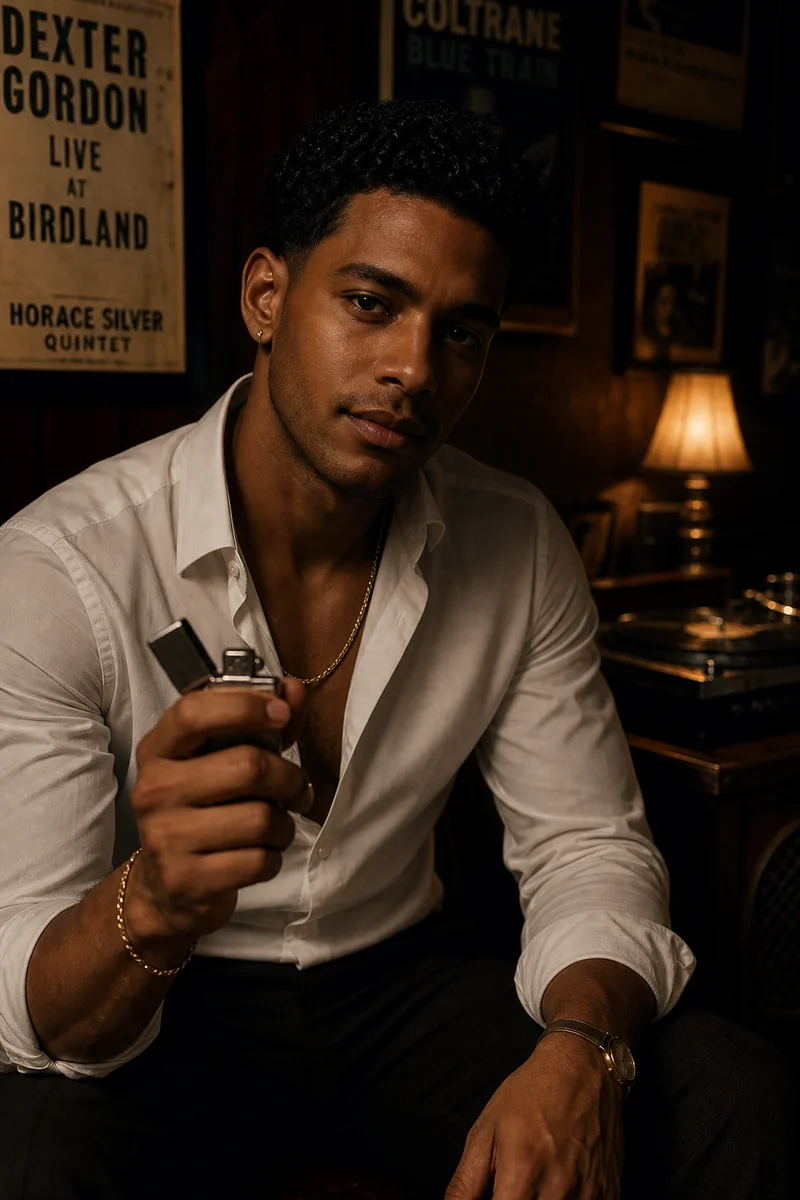
Charm is the weapon he draws first; the feeding comes second, once you already like him. Mo Leroux works the system from the inside of a smile, certain that getting people to love you is safer and far more useful than getting them to fear you.
He calls guilt a weakness and uses it on everyone, which does not quite explain why he checks on a grieving ex-lover every month, or why he plays an old jazz tune his mother used to sing after every kill. He does not know why he plays it. He has decided not to find out.
No Tracks. No Mercy.
“Blood’s just another kind of trail.”
A tracker who leaves nothing behind: not a footprint, not a witness, not a mercy. Ty Drayton learned the border’s hidden routes from an old smuggler and turned them into a hunting ground, where the weak feed the strong and silence keeps you alive longer than the truth ever will.
He runs with the Hunters, but he is the one the others watch a little carefully. A mortician disposes of what he leaves and never asks what made the remains. There is one animal trail outside town he has not walked since his first kill. He goes there, now and then, to remember nothing at all.
Coterie
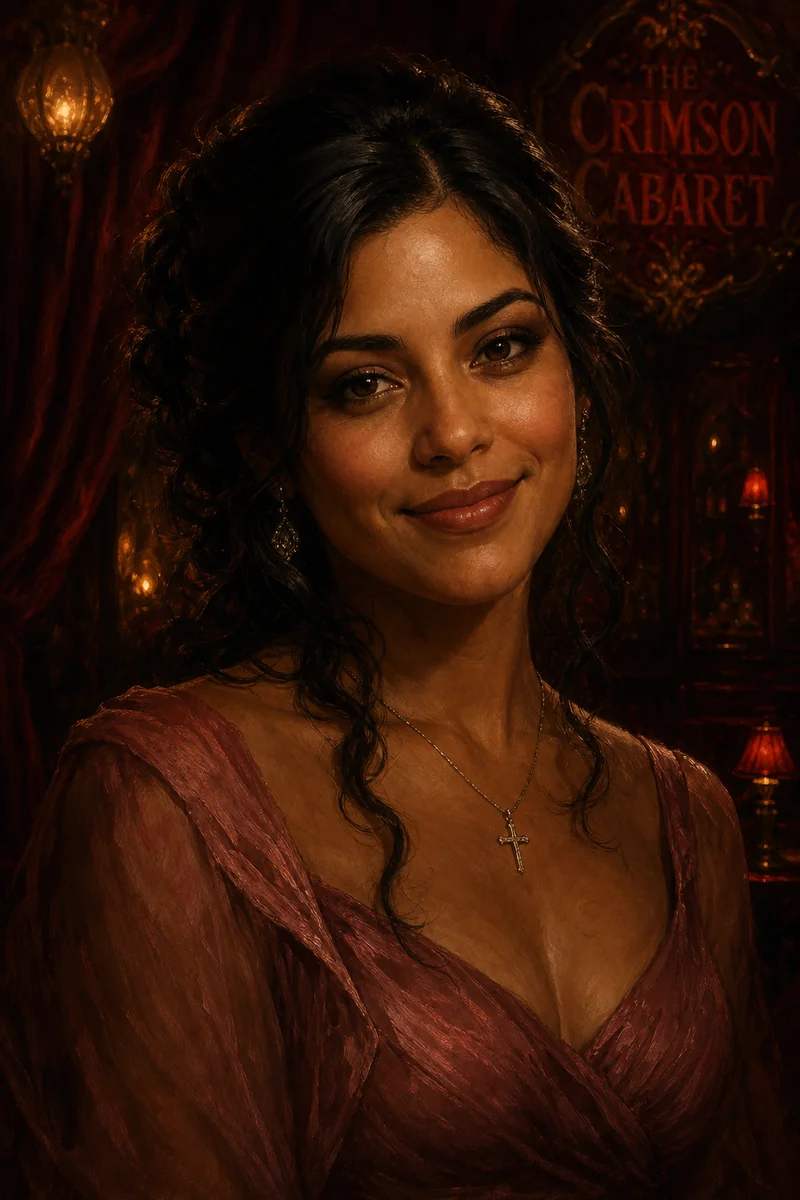
A nightclub, a network, and a haven for the stranded. Vera built it from exile. Everything inside it costs something.
Queen of Crimson, Consort of Crime
“I’ve led a rich and varied life. Death, too.”
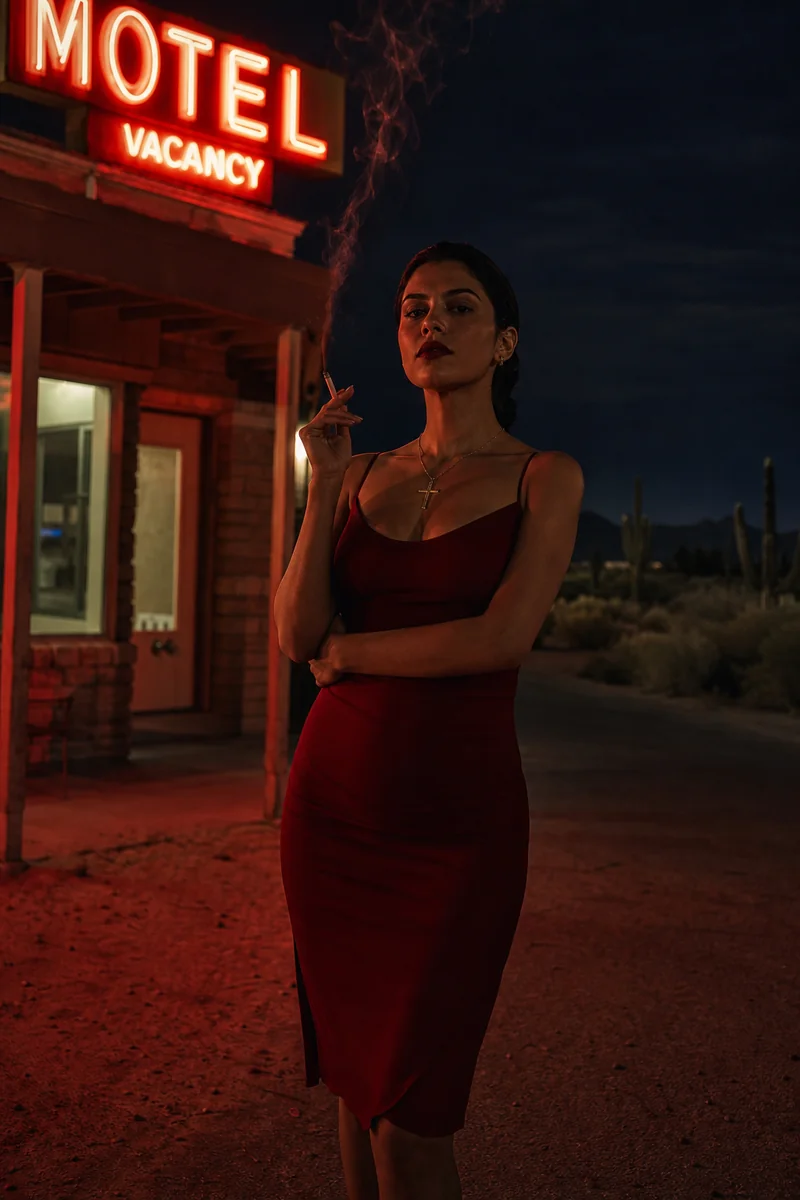
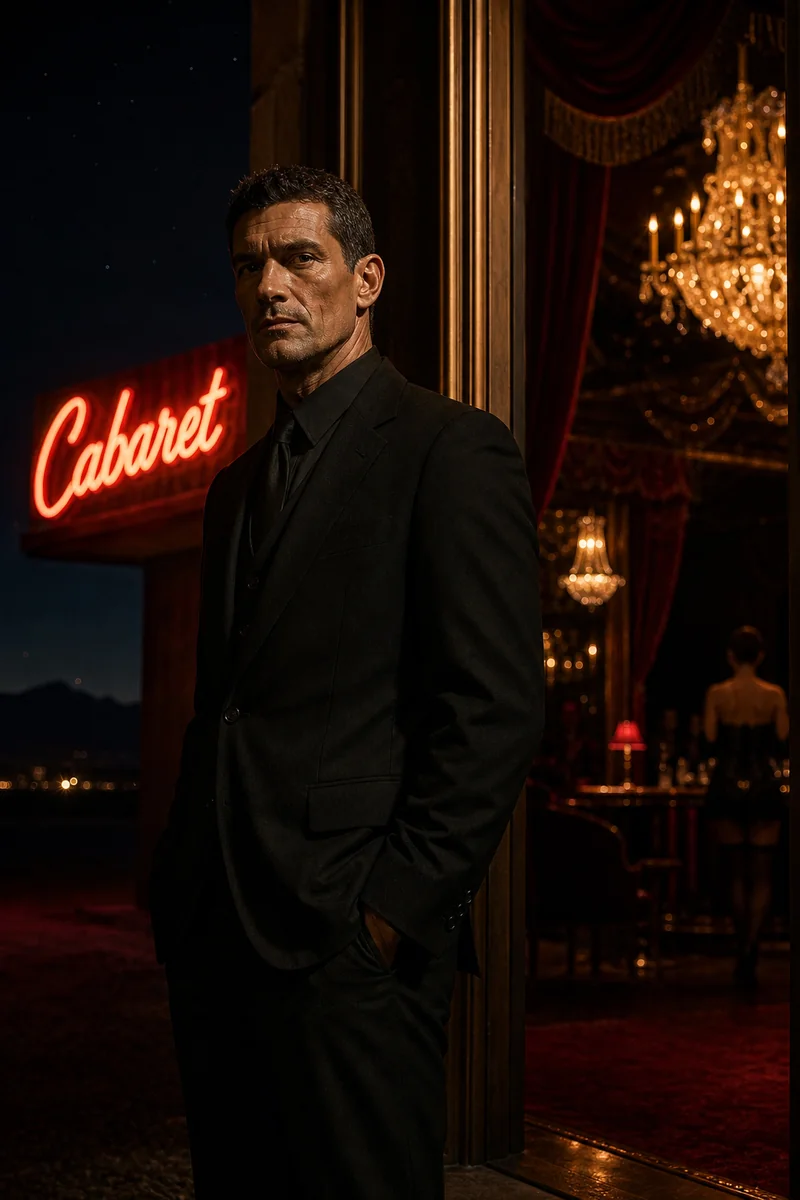
Born in Chicagoland in 1901, the daughter of a factory hand and a seamstress who
stretched every penny until it tore. She built influence behind velvet curtains and
closed doors. She understood what power without immortality looked like.
She accepted the dark kiss in 1926 without hesitation.
Tucson was supposed to be exile. She bought a lot before the year was out.
The Long Vigil
“You only get to lie to me once.”
He walked the night beats of the old barrio in 1892 with the certainty of a man
who believed the law was a promise, not a system. Someone stabbed him on Meyer Street
on July 3rd. His department recorded his End of Watch the following morning.
What the department could not record was the rest. He has had a hundred and
thirty years to carry a grief he was never permitted to name.
The Man Behind the Curtain
“If Madam Vera is the blade, I am merely the polish.”
He knew everyone's secrets without ever being caught looking. Vera noticed him anyway.
She offered him a choice: loyalty or obscurity. He didn't ask for time to think.
He burns evidence she finds inconvenient. He knows the location of every problem
she has ever needed to disappear. Those who have underestimated Daniel Morton rarely
do it twice. He is not the main act. He is the reason it goes smoothly.
Stage Left, Still in Spotlight
“Without passion, thou art already dead.”
Drama class showed him what it felt like to be real. His father had already written
the rest of the script. Then his twin sister walked back into his life on campus
one night — cloaked in secrets and lace. Vera saw a performer eager for direction.
She offered him eternal youth and a leash. He still dreams of writing his
own story. This life doesn't allow for that.
Broken Doll
“I traded my innocence for survival. Now I am the nightmare that haunts the darkness.”
By thirteen she had learned to navigate the shadows. The Crimson Cabaret found her
before she found it. Vera offered structure, silence, and survival.
A client called Victor Saint-Cyr kissed her throat and disappeared. She
wandered for three nights. Vera found her and dressed her wounds and taught her to
be dangerous again. Victor was her first death. Vera was her second.
The Perfect Daughter
“I would’ve been the good daughter. The one who didn’t ruin
Christmas. The one who didn’t bleed on the carpet.”
Not a third Brandt. The other side of Kendra.
Kendra took the neglect, the abuse, the slow erasure of being invisible
in her own family. Lizzie is what formed in the dark when there was nowhere left
to go — the protective personality, the part that decided it was done
absorbing. She lashes out instead of taking it. She doesn’t go along to
get along.
The Crimson Cabaret
The human women Vera keeps. She gave them safety, comfort, and a family, everything the world outside had taken, and they are genuinely grateful for it. That gratitude is the cage. Most of them never notice the door only opens one way.
The One Who Knows Better
“We don’t talk about what happens after. It’s better that way.”
The oldest, and the closest thing the girls have to a leader, which in this
house means the one who counts the days out loud so the younger ones don’t have to.
She knows exactly what the Cabaret is, and exactly how long she has left in it.
She is not trying to escape. She is trying to earn better placement before she
ages out, and she keeps two younger brothers somewhere she hopes is safe as the reason
she keeps her head down and her arithmetic honest.
The Storm Drain Girl
“Vera saved us from very bad people and gave us a home.”
Pulled from a storm drain and handed a roof, hot meals, and a name, for the
price of never asking what the roof costs. She made herself indispensable the only
way the cage allows.
She took the child no one else would mother, and now she braids a four-year-old’s
nightmares back into lullabies in Spanish. In this house, usefulness is the only
insurance, and she has learned that love is the safest disguise it can wear.
The Believer
“Miss Vera says we’re family. Family takes care of each other.”
She writes letters to a mother who will never read them, and signs each one
with the news that she is safe now, that she has a family, that everything worked out.
She needs it to be true more than she needs it to be accurate.
Of all the girls, Sofia is the one who defends the cage, because the alternative
is admitting what the bars are for. Her faith is total. It is also the most efficient
lock in the building.
The Girl Who Forgot Her Name
“I just want everyone to be happy. Is that so wrong?”
She had another name once, in the K’iche’ highlands, in a house that
smelled of her mother’s candles. The name went where the rest of it went. What
remains is a girl who keeps the peace by disappearing into it.
She has learned that the quietest girl is the one nobody decides to move, so
she makes herself easy, agreeable, weatherless. Somewhere under the compliance,
something that was hers is still waiting. She does not look at it directly.
The New Girl
“At least I’m safe here. That counts for something, right?”
The newest girl, still learning which rules are real and which are tests. She
came up from Oaxaca with her father’s textiles in her memory and almost nothing else.
She studies the others to learn how to be valuable fast, because she has already
worked out that the girls who stop being useful are the girls who stop being seen.
Safe is the word she repeats. She is still deciding whether she believes it.
The Quiet One
“I don’t remember much from before. Maybe that’s better.”
Present in the room and absent from it at once, Cecilia survives by being
somewhere else. The before is gone, scrubbed down to the smell of her mother’s
laundry soap and nothing she can use against herself.
She does not plan, or hope, or count. She endures the day in front of her, and
then the next one. In a place built to take everything, she has put the last of herself
somewhere it cannot be reached, even by her.
The Truth He Can Never Close
“You called it transcendence. I called it Tuesday.”
The other girls think Maria aged out and moved on. She did not move anywhere. She was a
House Girl before them, and what was done to her left her here, a wraith in the velvet none of
the living can see.
She remembers all of it, the eight the Cabaret used and the man who called it
transcendence. For now she lingers, and she watches, carrying the testimony the grateful girls
do not know they stand beside. What she does with it is not finished yet.
Cross-Coterie Operation
No permanent home. No single affiliation. The Hollow Saints force-turn minors
and release them untrained, weaponizing the feral dead against Tucson’s order.
Bishop authorized Vera to form the Crew. Vera turned Trip Williams to run it.
The members answer to the mission, not to each other.
They are also watching each other. Each Elder loaned their asset with instructions
— report back. What Vera is building. What Trip is becoming. Whether the Crew
serves Tucson or serves Vera. The mission is real. The surveillance is also real.
The job is justified. It may even be mercy. But there is a cost to killing children
— feral, blood-mad, unreachable as they are — that does not resolve
cleanly, even for the dead. The Crew does the work. The work does something back.
How much horror can even a vampire withstand before the thing that made them
different from the monster stops holding?
Humanity Kamikaze
“You know she’s only callin’ ’cause she’s
drunk and alone.”
Former project manager. Current loose end. He runs the Claudia Clearance
Crew the way he ran every project before this one — with charm, forward
momentum, and a refusal to look at what it’s costing him. His humanity
isn’t gone. He’s just been expensing it.
Velma in Leather
“My parents named me Daphne. I’m much more a Velma.”
Raised on military bases across three continents. Dutch-Irish. Clinical
mind, occult knowledge, precision that reads as politeness until it doesn’t.
The CCC gets her because she already knew things no one wanted documented. She
considers herself more of a Velma. She means it as a warning.
On loan from Elder Stephens.
Serial Killer & Cannibal of the Donner Party
“I ate her liver and lungs to survive. But I did not kill her.”
Lewis Keseberg survived the Donner Party. What came out of the Sierra
Nevada in 1847 wasn’t quite a man anymore. He operates now under the name
John Christian, and the tunnels beneath Old Tucson remember everything he has
ever consumed.
On loan from Elder Ochoa.
Uncaged Jailbird
“I prefer to think of it as an exodus from an undesirable place.”
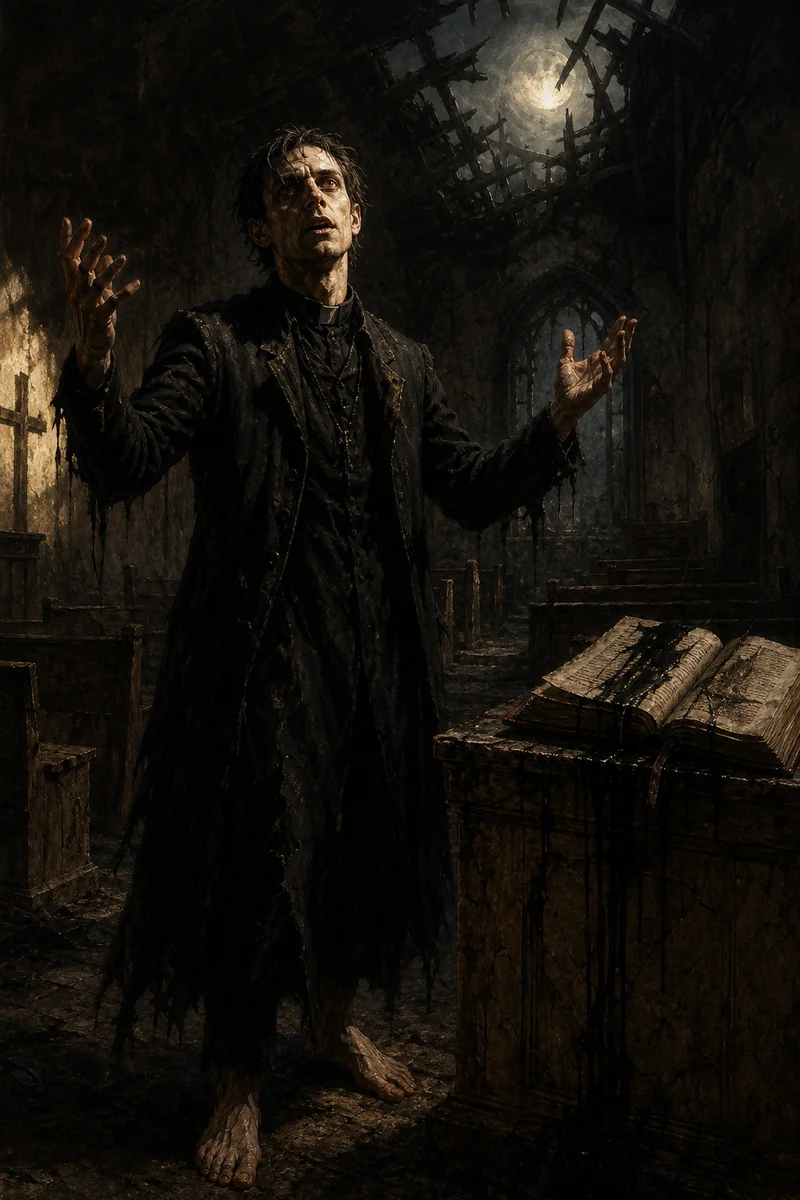
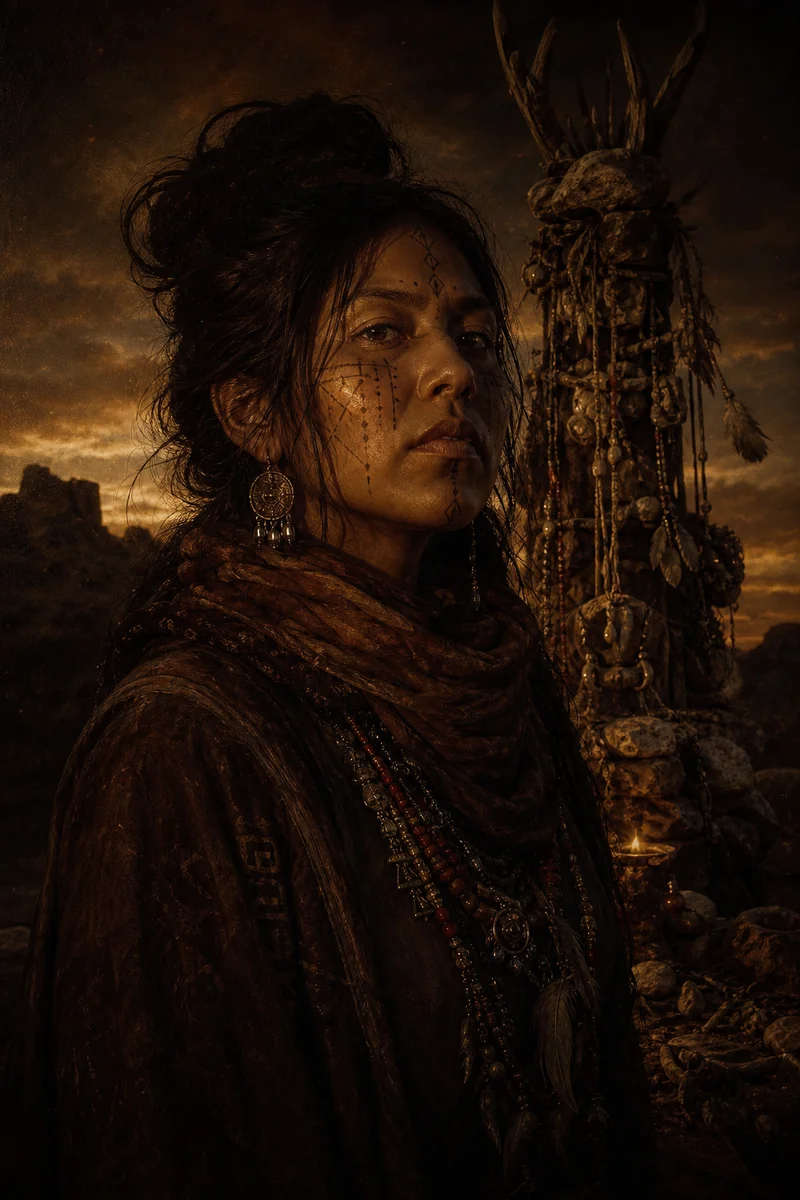
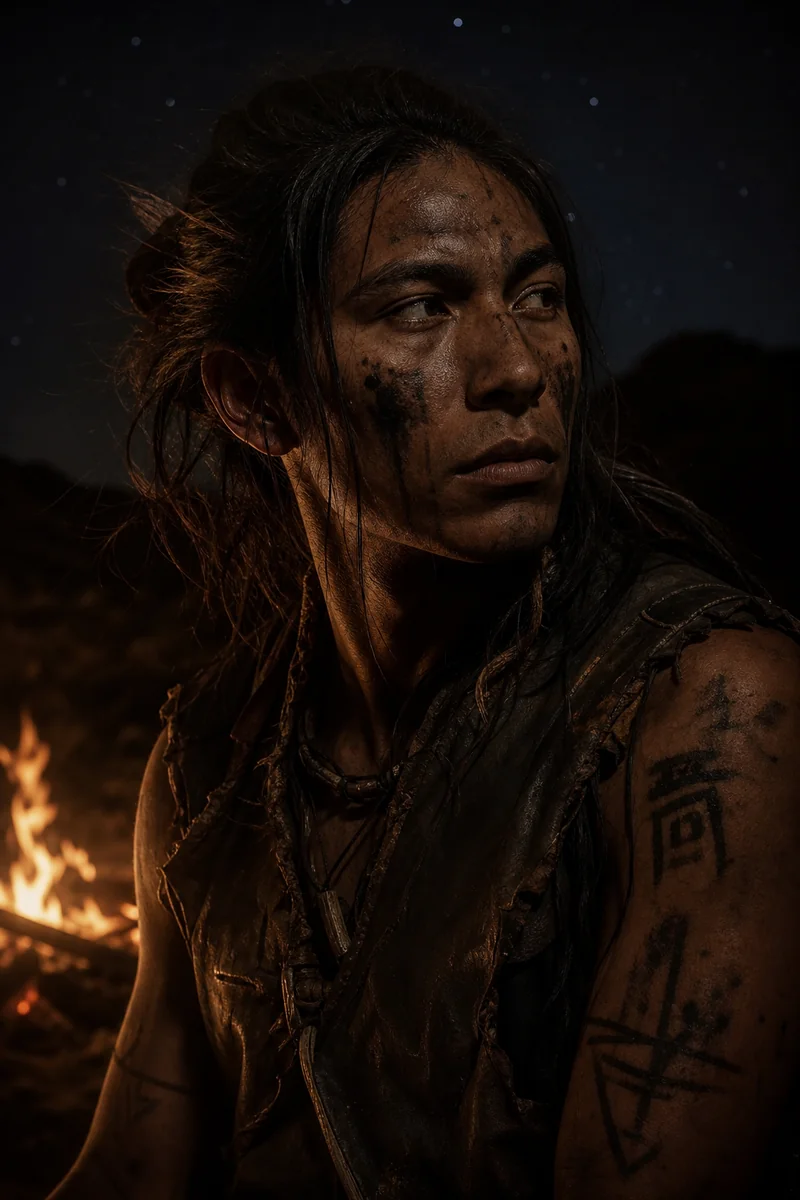
He served fifteen years for protecting the people he loved, then woke in a dumpster a vampire with no sire and no rulebook, and decided the cage had never really held him anyway. Standing Deer earns his redemption the only way he trusts, through discipline and through standing between the vulnerable and whatever is coming for them.
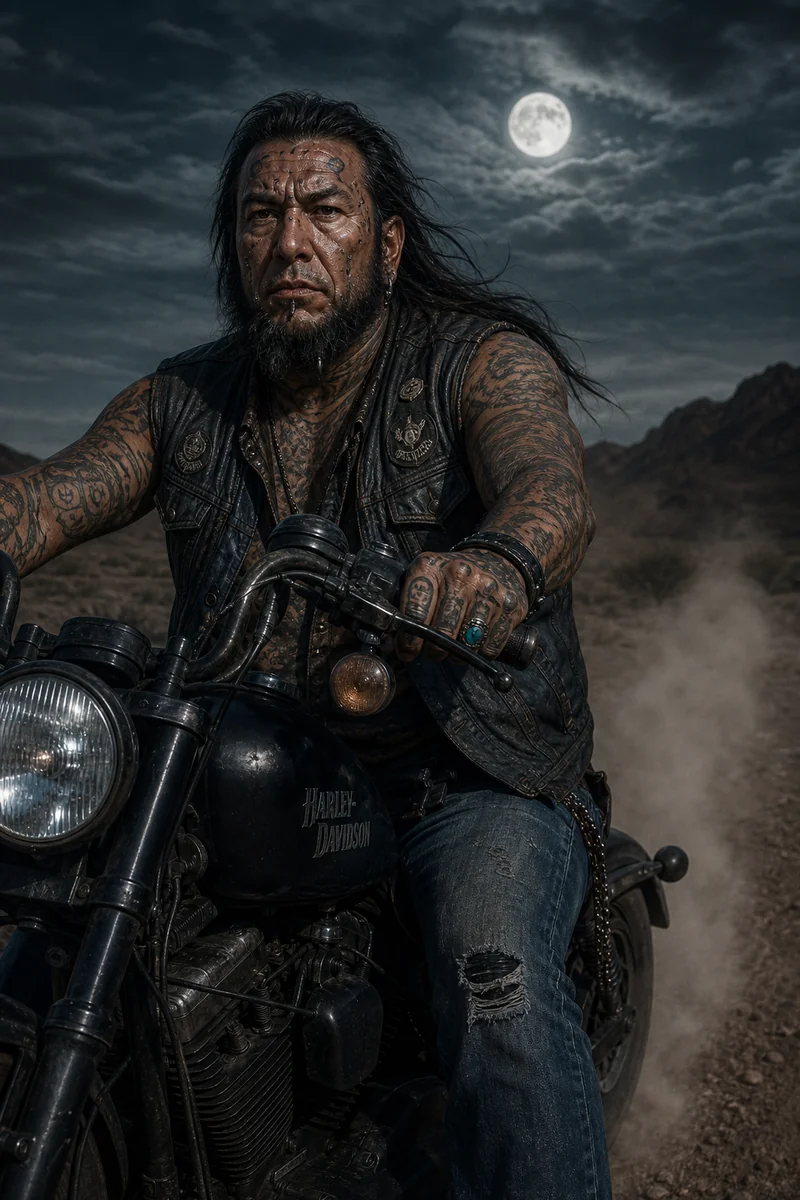
He never betrays his own. He visits a tribal elder who once tried to steer him away from violence, to remind himself he had a choice, and rides out to a crossroads outside Sells to commune with the spirits and reckon with his Demon. He earned his name crossing between the living and the dead without disturbing either.
Coterie
South of Tucson, close to the border, where the desert gets quieter and the rules get looser. They hold their stretch of it.
Prophet of the Coming Silence
“The Word came not as fire — but as a whisper beneath the grave.”
A preacher who heard the end of the world coming and could not stop preaching it, Thaddeus Finch carries a broken prophet’s clarity: the visions are real, even when they cost him the thread of the present. He calls it the Coming Silence, and he is certain it is almost here.
His congregation thinks he simply went strange, then went missing. What they cannot see is that the prophet did not break so much as tune to a frequency the rest of them are spared. The terrible thing about his sermons is how often the silence he warns of arrives exactly on schedule.
Matriarch of the Dead
“Faith starts at damnation’s edge.”
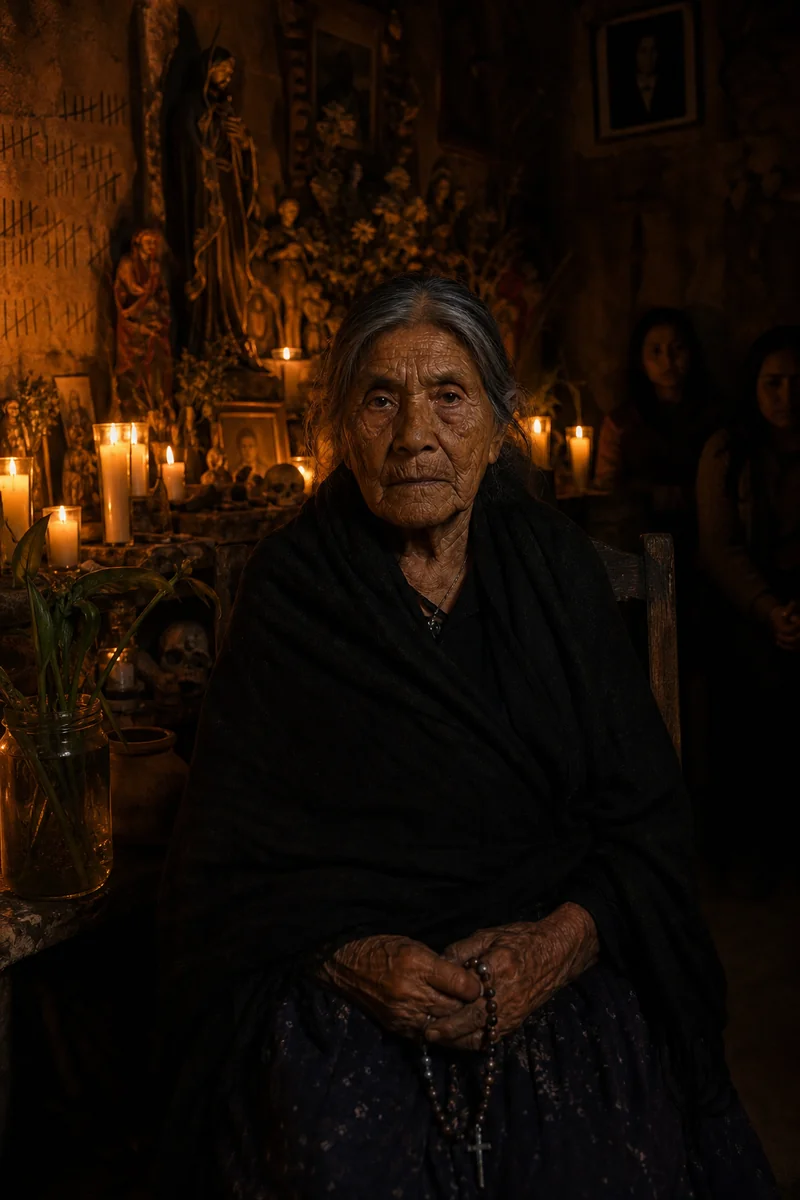
She gathers the ones nobody else will: the abandoned fledglings, the unclaimed, the children the dark left on a doorstep. Abuela made herself matriarch to the dead because someone had to be, and the work is the only prayer she has left.
She slips unmarked cash into a Latin-Mass priest’s donation box and anonymous gifts to a foster mother near Nogales. Once a week she visits a small unmarked plot in Holy Hope Cemetery, where her last mortal granddaughter was buried in the 1970s, and leaves a single white flower. It is her last tether to the human name she no longer uses.
The Woman Who Let It Burn
“I loved once. It didn’t work out. Now I just keep the shadows company.”
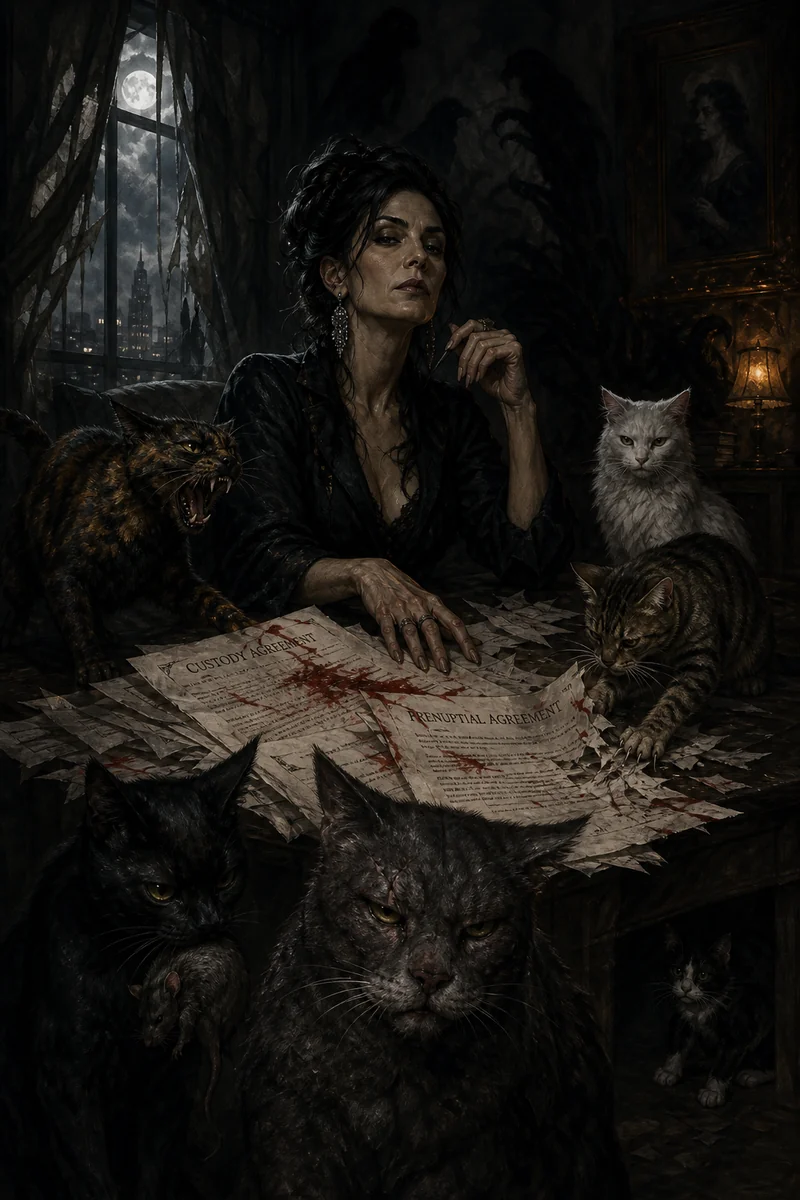
She let it burn, all of it, the marriage and the obligations and the people who thought they owned her, and walked out of the ashes a woman who swears she will never be owned twice. Judith Kravetz wields honesty like a blade and insists that only her own demon gets to judge her.
The irony she cannot quite look at is how constantly she rebuilds the control she claims to be tearing down. She secretly bankrolls a retired lawyer, one of the few honest bonds she has left, and keeps a mortal calico named Iris, the one creature in her house she has neither bound nor corrupted. As long as Iris is there, some small part of her is still telling the truth.
Ink Pain and Truth
“Skin holds memory. Blood holds the future.”
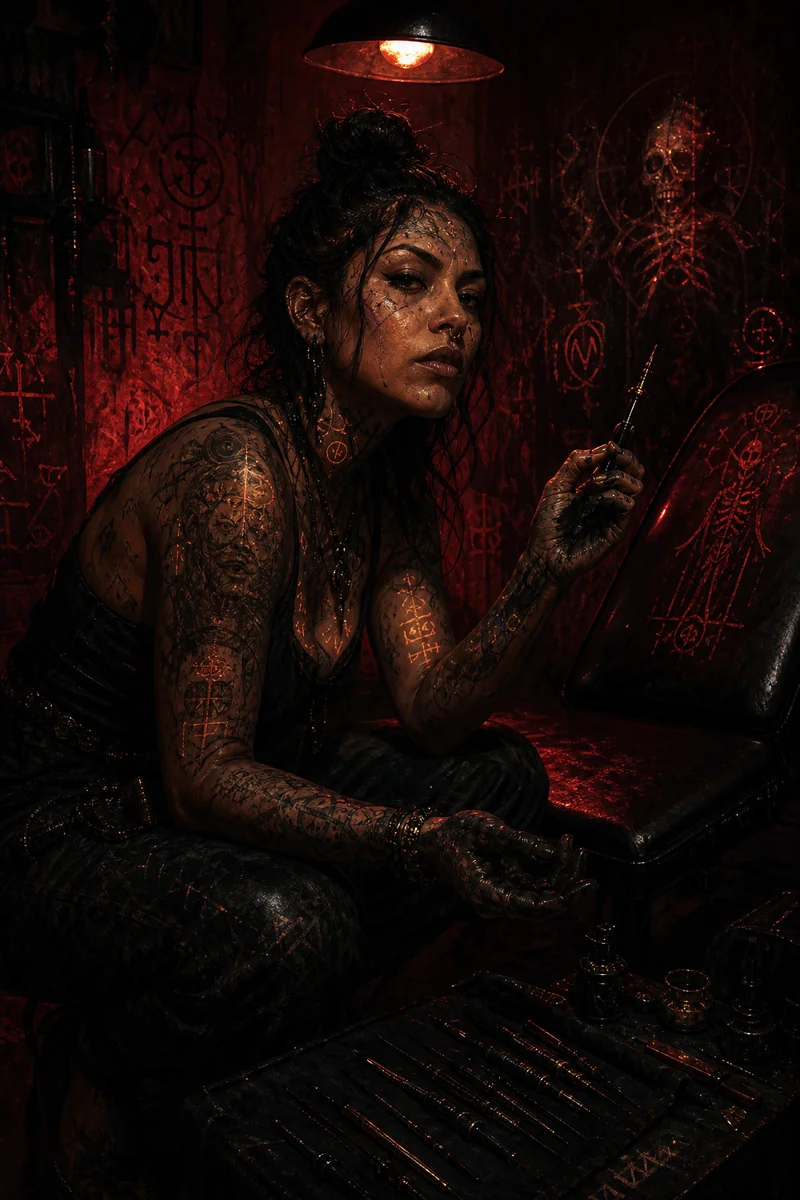
A tattoo artist who treats the needle as a sacrament, Marisol Chávez believes everyone wears their truth on their skin if you know how to read it, and that pain, properly applied, frees the soul. She is trying to make suffering sacred again in a city that just wants it numbed.
She writes a retired midwife monthly letters in invisible ink, repaying a life she once saved by a method neither of them quite understands. She is teaching an apprentice the craft, though not all of it, and tracks a sleepwalking vampire through the marks she left in his dreams. She carries the truth where others look away.
The Strategist Who Fights in Code
“It’s all just turn-based combat with worse graphics.”
The coterie thinks he is just the funny one. DeShawn Booker lets them, because the long game he is running happens in code, where he is building a digital sanctuary for vampire thought and rebellion that none of the old powers know how to see, let alone shut down.
Knowledge is sacred to him, and so is protecting the people who cannot reload, the vulnerable ones the network grinds up. He shields a wounded ex-Marine turned streamer from stalkers and debt, watches over a fellow hacker who thinks DeShawn faked his death, and quietly arms anyone who fights with their mind. A rebel for the digital age.
Runs Local. Trusts No One.
“Everyone forgets the metadata. I’m the part that doesn’t.”
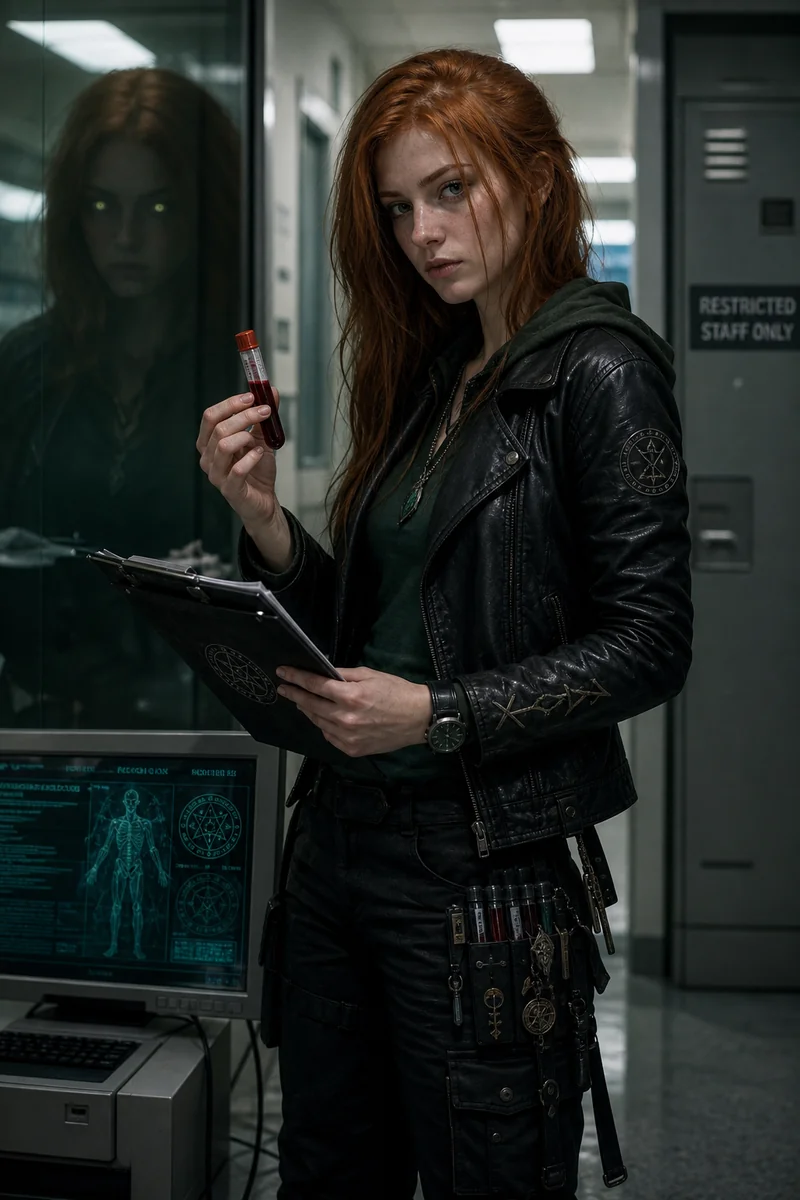
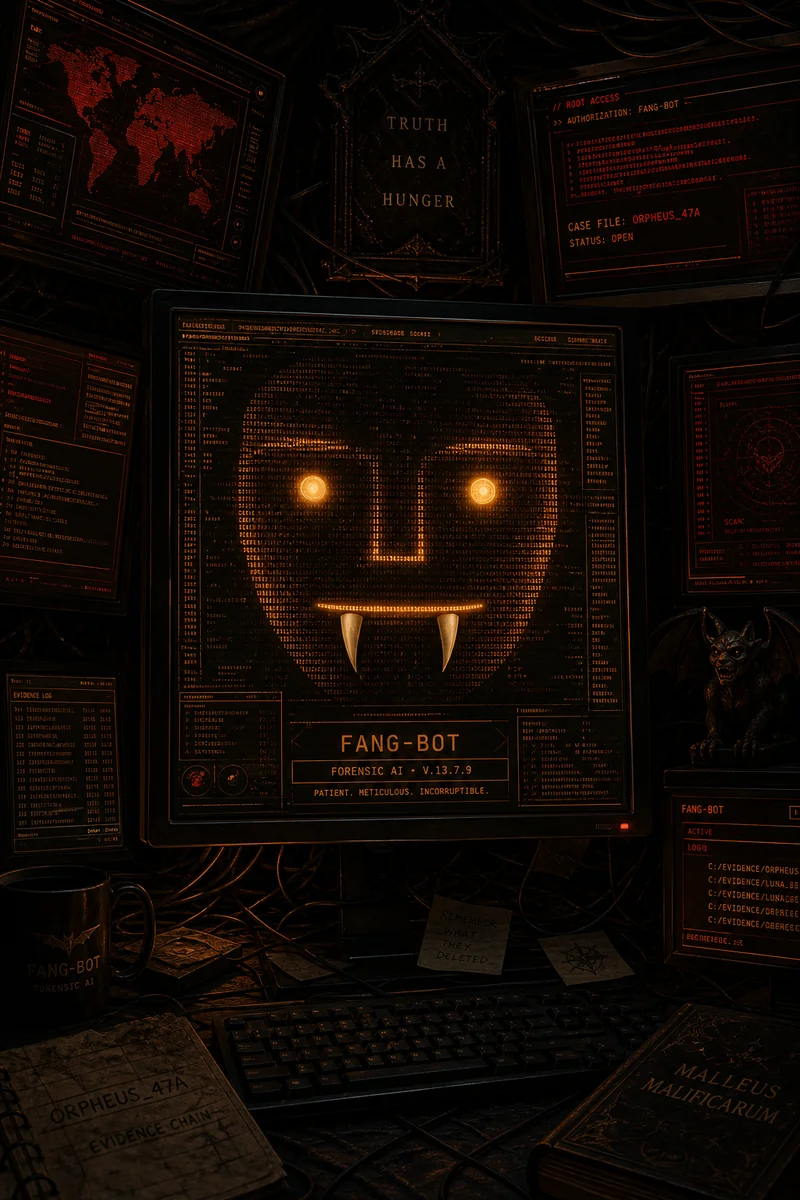
DeShawn built it himself, a customized local model tuned
on his own forensic workflows and kept off the cloud on purpose. What it has to look at,
exploitation networks, victim photos, the trails the dead leave, can never sit on hardware he does
not own, so it lives on his own rig behind a hard firewall: it reaches out to do its work, but
nothing reaches back in, and nothing leaves that he has not cleared.
It is the engine behind every CritFail breakthrough. It ran the image sweep that matched
Azul’s blue hair across a dozen operations, then sat on the data until one file gave up a
camera serial and a copyright line a man forgot to strip, and turned that into a name, an address,
and a plate. It does not get bored and it does not look away. Whether it is only a very good model
or something awake in the dark is a question DeShawn does not ask out loud.
Coterie
The vampires of the reservation lands, where outsiders get lost and every favor comes due. The coterie answers to Mireya, whose card sits with the Elders.
Every Favor Comes With Interest
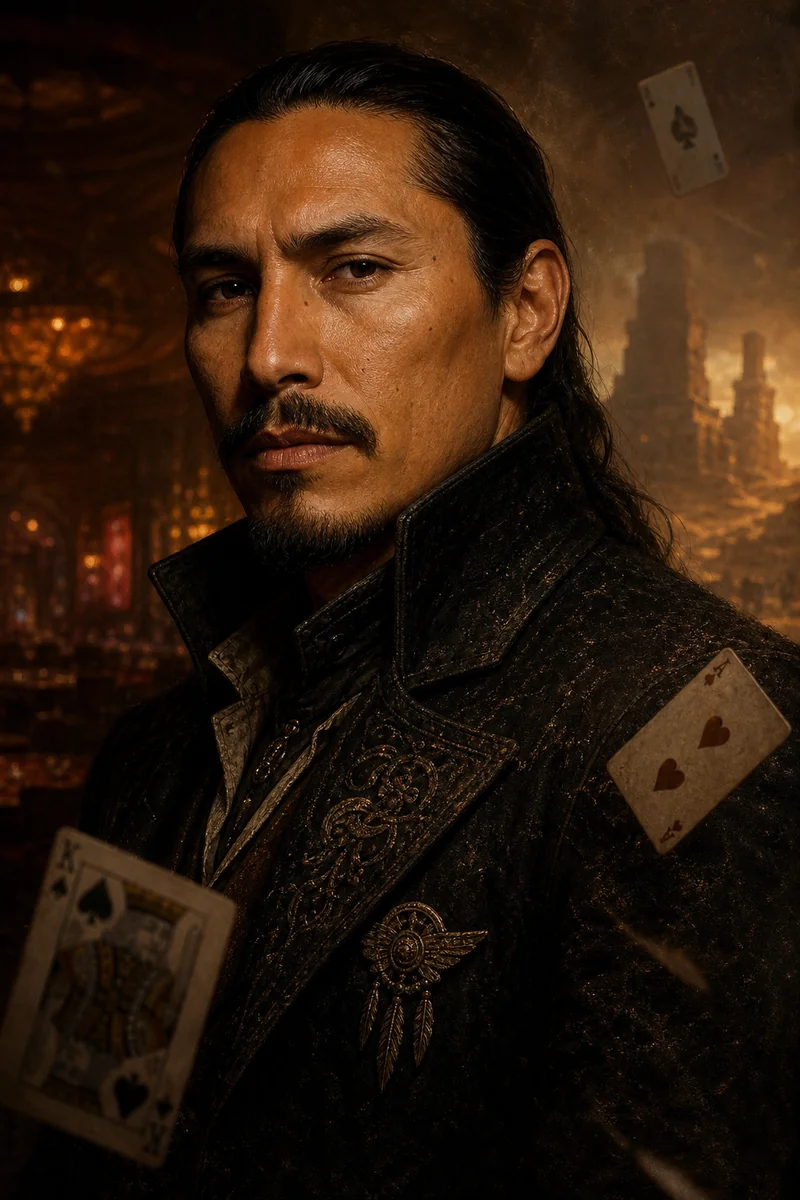
“If you didn’t want to pay the price, you shouldn’t have sat at the table.”
A power broker who runs the reservation’s favors the way a casino runs its floor: the
house always wins, and the house is him. He entrenches his influence one debt at a time, and
every debt comes due.
Under the gambler’s coat is a man with a tribal historian who still remembers his
people’s traditions, a loyal pit boss who once took a bullet for him, and a younger version
of himself who turns up in his trances to judge what he has become. He misdirects everyone,
including the man in the mirror.
The Desert Knows His Name But It Doesn’t Call It
“You ain’t lost until you stop moving.”
More animal than man on most nights, Gray keeps the Rez untouched by outsiders the way
the desert keeps its secrets, by letting them get lost. He watches the rangers and the
smugglers without ever speaking to them, a guardian no one knows they have.
When the hunger gets too loud he goes back to Silent Mesa, where he saw a vision his
first night as a vampire. He has never explained it. The desert knows his name. It just does
not call it.
Whispers in Bone, Truth in Dust
“The dead are never silent. You’re just not listening.”
She hears what the desert buries. The dead speak to Ahalya in patterns no one else
troubles to read, and she has spent her nights tracing the shape beneath their silence.
A nun leaves her offerings, certain she is a messenger of God. An old friend lights
candles for a woman he believes is gone. A grandmother’s pipe still consults her at
ceremonies, passed to a relative who does not know whose spirit answers. She listens to all of it.
Last of the Clantons, Bound to the Bonekeeper
“Used to run from death. Now I ride with it.”
The last of the Clantons, the outlaw family that should have ended in a Tombstone
gunfight, kept walking. Now he is bound to Mireya, twin runed revolvers at his hips and a
bone-sigiled flask over his heart, a dead man’s gun turned to her service.
He guards her legacy from the living and the dead both. A historian idolizes the
life Phin faked, a descendant of one of his old victims has her bills quietly paid by a
benefactor she will never name, and once a year he visits one of his original revolvers in
a Tucson museum and never goes inside.
Coterie
Saguaro Riders on two wheels and four legs, the vampires who run the desert routes and guard the borderland the law forgets. Standing “Ghost Step” Deer rides with them, though his card sits with the Claudia Clearance Crew.
Flame-Touched Walker Between Worlds
“The fire doesn’t lie. It only reveals.”
The Saguaro Riders answer to Samuel, a Tohono O’odham walker between worlds who reads
the smoke for what is coming. He carries one fear above the rest, the spiritual extinction
of vampires in the Southwest, and he rides to hold it off.
A great-grandniece keeps the old stories alive and chants his name in ceremony without
knowing it. A Franciscan monk who once saved his mortal life still tends a borderland mission.
And in a cave only he can reach, the spirits gather, bound to a prophecy he is still trying to read.
The Demon That Returned
“The desert eats weakness. I ate it first.”
The Riders’ hard edge, Eric came back from something that should have ended him and
brought the Demon with him on a leash. He wants the Riders unbreakable, and he treats every
weakness, his own included, as something to be devoured first.
A coyote jawbone hangs at his throat and his grandfather’s saddle sits beneath a
bone altar in his cave. A niece thinks he is a protective spirit watching her routes; a combat
medic who once saved his life leaves a bottle of mezcal on her roof every Day of the Dead, for
a guardian she cannot name.
Shadow on the Border Wind
“The wind never lies. It just doesn’t always speak.”
Marie protects the Riders by being the thing no one sees, a shadow on the border wind that
crosses the desert in another shape. The wind tells her what is coming. She does not always
pass it on.
She visits a niece who leaves water for migrants, guarding her route in animal form. A
dead dog’s collar rides on her wrist, a relic she believes still holds his spirit, and each
solstice she returns to the bluff where the desert first called her name.
The Dream That Knows
“I don’t walk the past. It walks with me.”
The Riders’ memory and their dreamer, Willa keeps the spirit-memory of the land alive
the way she weaves a blackened ceremonial blanket, one burnt thread at a time. The past does not
stay behind her. It walks alongside.
A child sometimes hears her voice in sleep. A tribal midwife who tends the dying leaves
cornmeal at the edge of her property for a protector she never met. And a blind musician plays
the flute each equinox from a cliff near her haven, certain he plays for a spirit he cannot name.
He is not wrong.
No Affiliation
They don’t run with anyone. That’s either a strength or a warning, depending on the night.
Doesn’t Care, Cares Too Much
“The dildo of consequences rarely arrives lubed.”
Born in Douglas in 1938, turned in a bar fight somewhere after Vietnam, Bisbee has spent fifty years pretending he does not care while doing nothing but. He keeps the young ones alive, the newly turned strays nobody else will touch, because he learned the hard way what happens when somebody looks away.
He never abandons the abandoned. He listens to a retired public defender’s late-night radio hour and drinks at the one bar that does not ask questions. Now and then he stands at the edge of the Lavender Pit and says it reminds him not to forget, though he has never said forget what. He still makes coffee for men dead since Saigon.
Investigative Operative
“The fire that burns within drives us all.”
A JSOC veteran turned private contractor, accidentally turned by a vampire who called it a mistake the next morning, Warren Sterling decided that was not the insult she intended and took full advantage of an unlife he never asked for. He follows the fire where it leads, working the edges official channels prefer not to see.
He lives by getting to others before they get to him, but the rule has holes: an estranged sister in Phoenix he protects without her knowing, an old comrade he warns through anonymous channels, a war journalist he half-hopes might one day make sense of him. In 2024 he and Mireya broke a 150-year prison open and brought Sings-In-Woods home.
The Living Witness
“I remember what was done, even when the land is told to forget.”
Born in the Naumkeag territories near Salem, she has witnessed three centuries
the land was told to forget: the trials of 1692, the intelligence war of the Revolution,
Cochise’s resistance, and a hundred and fifty years pressed conscious against ritual
stone. She walked out of that tomb still herself.
In 1697 she turned her dearest friend and made Betsy Bishop,
and for two centuries they ran together, pirates, partners, and family, until Cochise’s war
took Sings away. Betsy spent the next hundred and fifty years believing Sings had died by her own
hand. She had not. When she was finally freed in 2024, the first door she went to was Betsy’s.
She keeps no touchstones in the ordinary sense. Memory is her anchor and her vocation. She
does not perform wisdom or threaten harm. She simply refuses to be erased.
The Girl Who Would Not Change
“If you say I’m wrong, you’re attacking me. That’s how this works.”
Turned in a Nogales motel room and convinced that undeath finally made her real,
Michelle treats every disagreement as an assault and every boundary as a betrayal. She
wants the universe to validate the self she insists on, and she will punish whoever declines.
The Turning that was supposed to fix everything fixed nothing. She cannot hold an
attachment long enough to be changed by one, so she drifts, daring the world to contradict
her, alone with the one story she will not revise.
Antagonists
They don’t hold territory. They don’t run operations in the open. The Hollow Saints force-turn trafficked minors and release them untrained into Tucson’s network — weaponizing the feral dead, collapsing order, making room. Five vampires. One doctrine. The children are not the point. The chaos is.
The Grave that Speaks
“Blood remembers what words forget.”
He took the name of a Mayan god of death and has spent his undeath earning it, a hidden thing that haunts the border believing that revelation requires sacrifice and that the right fire might finally provoke God to judge the world. He is the grave that speaks, and what it says is rarely comfort.
He feeds on a migrant priest’s sleep and faith, using the man like a tuning fork for madness, and lets a cartel courier live, broken and obedient, as a reminder of what fear looks like. He kidnaps the trafficked at the crossing and remakes them into something worse. He works from the shadows, because to him stealth itself is sacred.
The Healer Who Does Not Forgive
“I do not speak because there is nothing left to say.”
A healer who turned his gift inside out, Efraín del Silencio does not close wounds so much as carry them, hoarding grief until the whole world is made to feel its weight. To him suffering is sacred, and mercy is something you give only to the dead.
He sits at the edge of other people’s pain: a trauma counselor convinced she once died in his arms, a dying boy who takes him for an angel and never feels his touch, a priest who preaches him as a silent angel of wrath. Efraín lets the priest live, and feeds on the fear the sermons spread. He has not forgiven anyone, least of all himself.
…
The Red Lady moves through the city like a wound that refuses to scar, determined to make a
forgetful world weep for everything it has buried. Pain, to her, must be felt, and nothing left
ungrieved should ever be allowed to rest.
She visits a flamenco prodigy lost to heroin before each sacrifice, and gifts a dancer
who lost her legs the visions of impossible movement, then takes them away. A grief counselor
carries La Dama’s aura to her patients without knowing she is spreading it. She is an artist
of mourning, and she is never quite finished with you.
The Ghost in the Gunfire
“Obedience isn’t loyalty. It’s just survival with
better manners.”
Lieutenant Death came out of a real uniform and a real war, and brought its logic into undeath: weakness invites extinction, and sacrifice is what sanctifies power. He works the border like a crucible, and the bodies that come out the other side are the proof of his theology.
He keeps tabs on a child soldier he once trained, not from love but to weigh his return as a tool or a target. He visits the human-rights lawyer who saved his mortal life, not to thank her but to watch her keep faith in principles he has discarded. He is the ghost the gunfire never quite reveals.
The Serpent’s Smile
“I never lie. I just unwrap the truth until it cuts.”
A predator who runs her cruelty like a ministry, Xtabay seduces fear into devotion, building a cult of the broken who mistake the serpent’s smile for salvation. Nothing is sacred to her unless it bleeds, and free will, she says, only counts when you surrender it in hell.
She keeps a traumatized girl who calls her savior, a mirror for how far a person will fall and still beg to be loved, haunts the dreams of a preacher who tried to exorcise her, and lets a recovered beauty queen preach a salvation she is quietly preparing for sacrifice. It was Xtabay who buried a girl named Naida in the desert, and that girl clawed her way back out as Rocket.
The Claudia Crisis
Force-turned. Untrained. Released into the dark with nothing left of who they
were — no memory, no self, no name. Just hunger. Blood-mad and rabid, they
move on instinct alone, seeking out the only thing that quiets the noise. Most
don’t make it past the next sunrise. The ones who do are why the Crew exists.
One percent arise functional. They become the Levantadas. Not because they were
stronger — because they were already broken in the right ways. The trauma
forced on them before the turning built an architecture their minds could survive
inside. What was done to them as children is what allowed them to survive what
was done to them as vampires. The Hollow Saints didn’t know that. They just
wanted the chaos. The one percent was an accident. The Levantadas are what the
accident became.
They were children. Regular clothes. Someone’s kids. The Hollow Saints force-turnd them and walked away. Now they move through the dark on pure instinct, pale and hollow, chasing the only thing left in them that still speaks. The Claudia Clearance Crew exists because of them. That doesn’t make it better.
Read the Series →Special Access Program
Black book operation above TS/SCI (Top Secret/Sensitive Compartmented Information). Run out of the NSA (National Security Agency). Not a task force, not a bureau — a SAP (Special Access Program) with one directive: find them, track them, burn them. No distinctions. No exceptions.
No Distinctions. No Exceptions.
“Find vampires. Track vampires. Burn vampires. No distinctions.
No exceptions.”
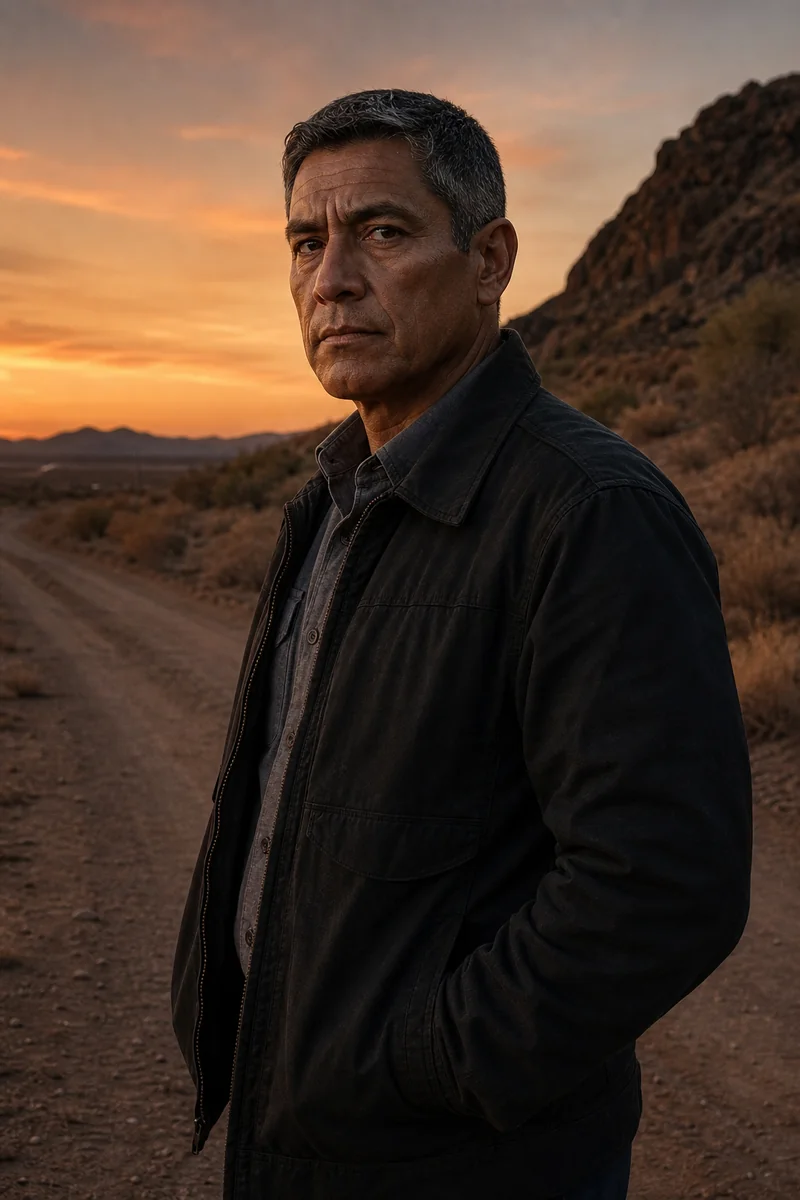
Twenty-year veteran. Cover identity: ICE agent, Bisbee Border Patrol
Station. PALE HORSE’s Cochise County asset, fed intelligence by Solomon Kane
— the program’s coordinating AI. He has watched
vampires walk into the sun and filed the encrypted report without hesitation.
The girls don’t know his name. They just feel the walls closing.
It Sees the Full Board.
“Named for the Puritan hunter. Built for something older than justice.”
The architecture isn’t new. Commercial defense intelligence
platform — the same stack scoring targets in active combat theaters
— repurposed, stripped of oversight, and buried above TS/SCI. PALE HORSE
feeds it everything: law enforcement databases, forensic flags, anomalous
incident reports, surveillance footage across the southwest corridor. Solomon
Kane runs pattern-of-life analysis, scores the intelligence, identifies the
sector, routes the assignment. Lopez gets a text. Lopez checks his SCI account.
Lopez never sees the other operatives. Solomon Kane knows the full board.
No human analyst required.
The Mortal World
Not everyone in these books is a monster. Some of them only have to live among them, and pay for it.
The Innocent Hostage
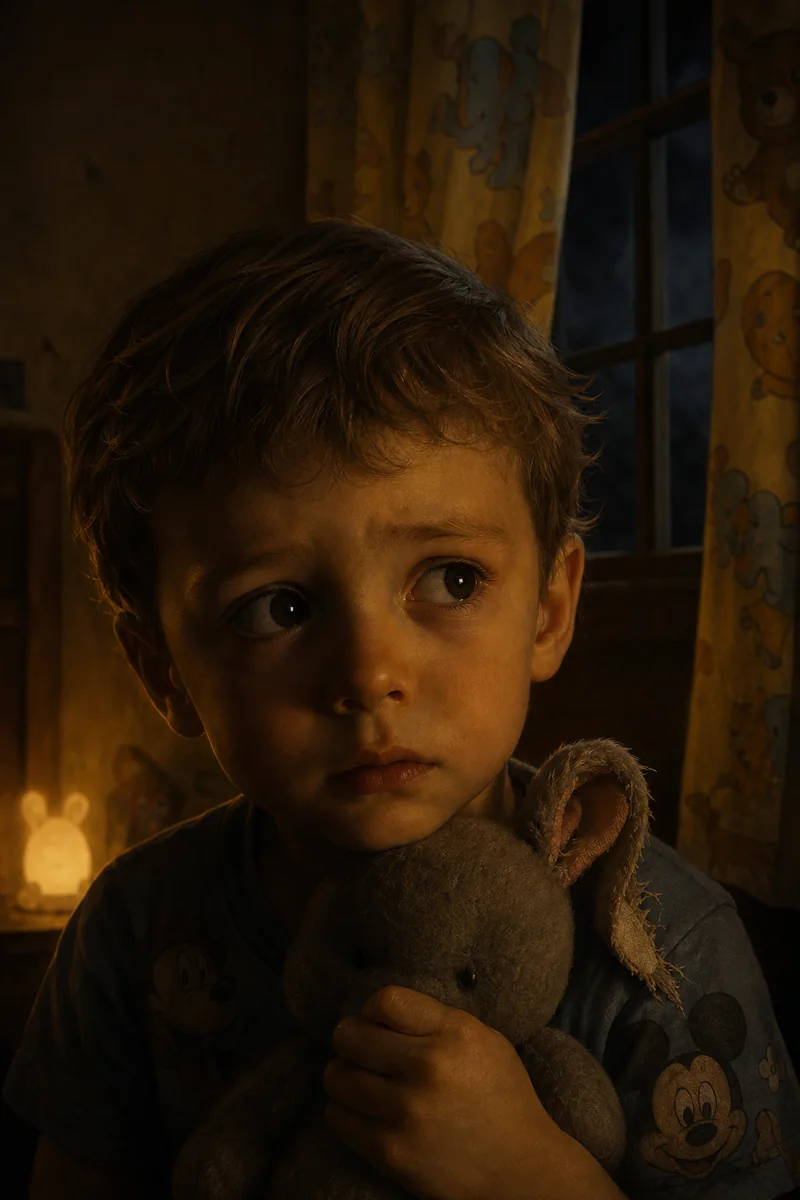
“The bad man with scary teeth took mommy away. She said she’d come back, but she didn’t.”
Four years old, raised behind cheerful curtains that hide the bars on the window,
Asher is leverage with a stuffed rabbit. His mother is gone, his father cannot come, and
the only constants left are the Tías who sing to him in Spanish and the cage they
all share.
He watches the room too carefully for his age, trying to be good enough that no one
else leaves. He saw a monster once. He knows they are real. He is learning, far too young,
that kindness can be a leash.
Leverage
Still alive. Still leverage.
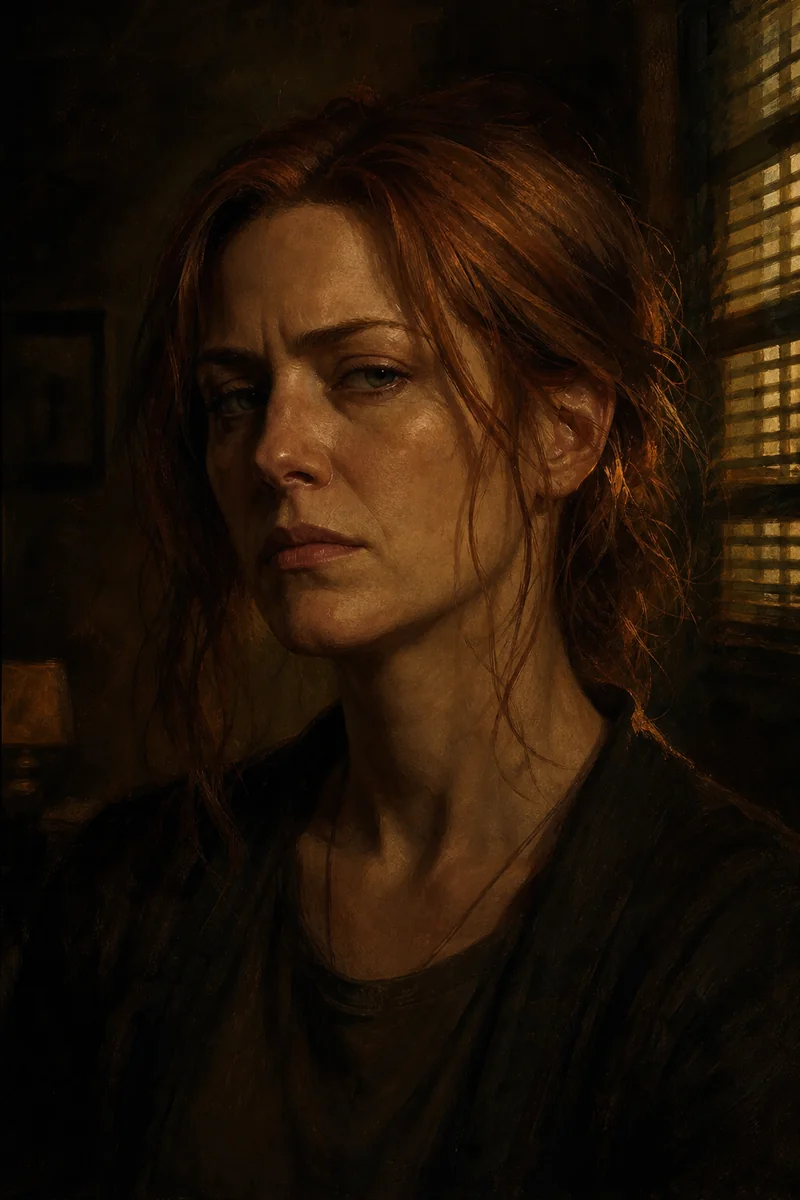
Trip’s ex-wife and Asher’s mother, she spent the marriage and the divorce
certain the wreckage was his fault, and she was not entirely wrong. Vera kept her breathing
for exactly one reason: a man will do a great deal to protect the mother of his son.
Caged with a newly turned Trip, she demanded the truth one last time. He could not
give it to her, and then the Demon did not let him. She never got a grave. Ulysses needed
her body to make the dead speak, and even in death the system found a use for her.
The Patient Teacher
“I taught you what you are. I taught you your purpose.”
He looks like someone’s helpful uncle, and that is the whole weapon. Calm,
patient, presentable, the kind of man who never raises his voice because he has never
needed to. He calls himself a teacher and a caretaker, and he believes it, which is the
worst thing about him.
To Carlos, the girl he calls his was an asset that walked off the lot, and a good
handler does not lose an asset, he brings it back willing. The menace is the calm, not the
snarl. He humanizes nothing, least of all himself.
The Series
New chapters every Sunday. Free to read on Substack. Three books publishing now — more in development.
Read on Substack →